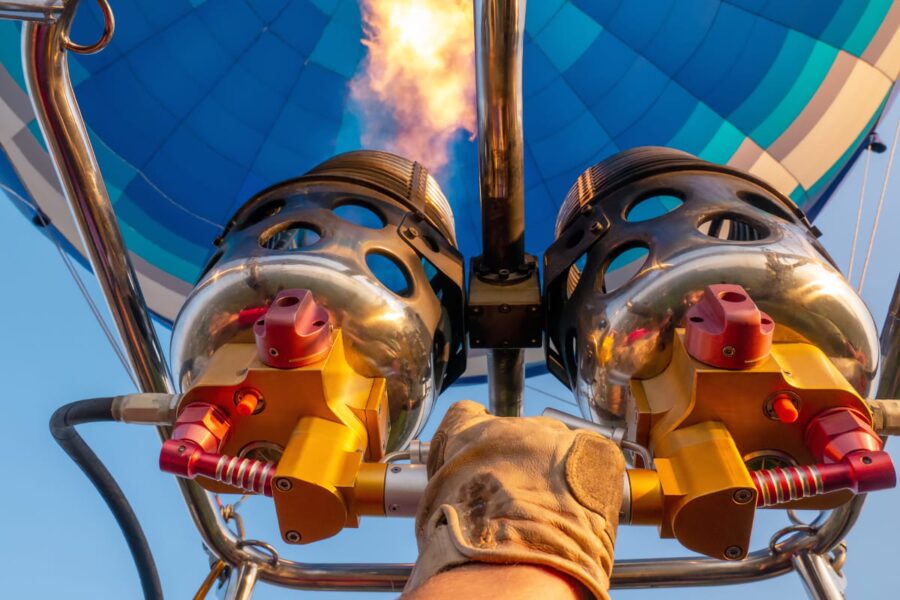
A hot air balloon flight is one of the most extraordinary experiences in the world of aviation. Controlling a balloon differs fundamentally from piloting an airplane or a helicopter because a balloon has no propulsion engine or traditional rudder. The pilot masters the airspace using heat, wind, and precise decisions made in a split second.
Passenger balloon flight requires the pilot to have in-depth knowledge of meteorology, gas physics, and navigation techniques. A free balloon pilot license issued by the Civil Aviation Authority confirms the completion of specialized training. From the very first minutes of the flight, it is clear that every decision the pilot makes is based on observing the atmosphere, rather than manipulating a mechanical steering wheel.
The mechanics of balloon flight are fascinating in their simplicity. Controlling flight altitude is the only direct tool the pilot has at their disposal. Changing altitude allows the pilot to enter different layers of air, and each of these can carry the balloon in a different direction. Understanding this principle is the key to learning how a pilot steers a balloon during a cruise over the landscape.
How a pilot regulates the altitude of a passenger balloon
Flight altitude is the only axis of control that the pilot has available during a cruise. Efficient operation of ascent and descent determines both safety and the ability to navigate. The pilot does not hold a rudder, but constantly regulates the temperature of the air inside the balloon envelope.
Gas burner as the primary tool for ascent
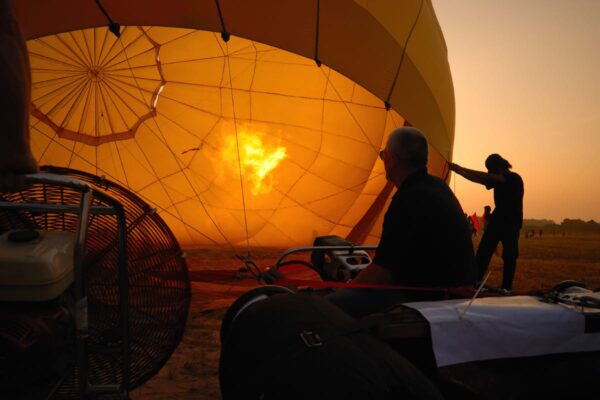
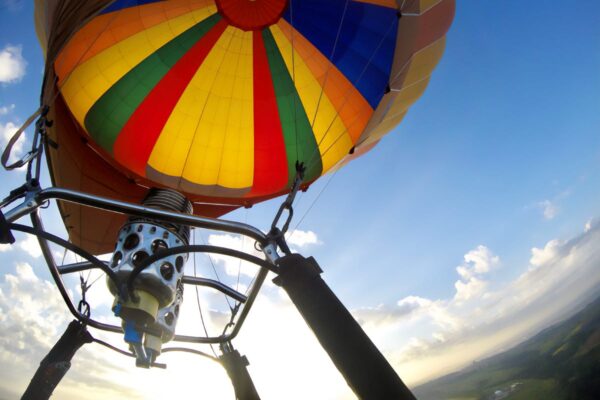
The gas burner mounted above the basket is the heart of every balloon. The device burns propane supplied from cylinders mounted in the basket and emits an intense stream of fire directed into the envelope. Pressing the trigger valve, known as the blast valve, opens the fuel flow and initiates a flame lasting from one to several seconds.
Warm air has a lower density than the surrounding air, so it displaces the cold air mass outward, and the envelope becomes lighter than the same volume of cool air. Archimedes’ principle applies here with full precision, and the buoyant force of the aerostat increases in direct proportion to the temperature difference. An experienced pilot knows that short, frequent pulses of the burner provide better control than one long flame.
A typical balloon burner reaches a power of 2 to 4 megawatts and can heat the air inside the envelope by even a dozen degrees Celsius within a few seconds. The air temperature inside the envelope usually stays within the range of 80 to 120 degrees Celsius. A temperature that is too high risks damaging the envelope fabric, which is why the pilot monitors its upper limit using a crown temperature sensor.
Parachute valve and releasing hot air
At the very top of every passenger balloon envelope, there is a circular parachute valve. The name comes from its shape, similar to an umbrella, which tightly seals the opening in the fabric. The pilot pulls a thick rope running along the inside of the envelope down to the basket and opens the valve, releasing hot air to the outside.
Releasing hot air reduces the buoyancy force, and the balloon begins to descend slowly. A short opening of the valve slows the ascent, while a longer one initiates a controlled descent. The valve is spring-loaded and closes automatically when the line is released, which prevents uncontrolled deflation of the envelope during flight.
Envelope temperature and balloon buoyancy
The relationship between air temperature and the balloon’s buoyancy is simple but requires constant vigilance. An increase in temperature of a few degrees Celsius clearly accelerates the ascent, while a drop leads to a descent. The pilot must constantly monitor the envelope temperature sensor, as the balloon fabric can withstand a maximum of about 120 degrees Celsius without risk of damage.
On a hot summer day, the outside air is warmer, so the temperature difference between the inside and outside of the envelope is smaller. The pilot must heat the air more intensely to achieve the same effect as on a cooler morning. This dependency explains why balloon flights most often take place at dawn, when the air is colder and more stable.
The table below illustrates the impact of outside temperature on flight efficiency:
| Outside temperature | Envelope air temperature | Ascent effect |
|---|---|---|
| 5°C | 90°C | Strong ascent, large temperature difference |
| 15°C | 95°C | Standard ascent, good control |
| 25°C | 105°C | Weaker ascent, higher gas consumption |
| 35°C | 115°C | Difficult ascent, risk of envelope overheating |
Understanding this relationship allows the pilot to plan fuel consumption and choose the time of flight according to weather conditions. Flights during hot afternoons are technically more difficult and require larger propane reserves in the cylinders.
The influence of air density on flight control
Air density decreases with altitude, which has a direct impact on the balloon’s behavior. At an altitude of 1000 meters above sea level, the air is thinner, and the balloon needs a higher internal temperature to maintain the same buoyancy as it does at ground level. The pilot takes this relationship into account when planning a flight over mountainous terrain.
Atmospheric air density also depends on humidity and atmospheric pressure. A low-pressure system brings thinner air, which reduces buoyancy. Before the flight, the pilot checks the pressure forecast and calculates the required envelope temperature to ensure a safe takeoff.
Why wind replaces a rudder in balloon navigation
A free-flying balloon has no propulsion engine or control surfaces to steer it left or right. The only method of horizontal navigation is moving vertically between air layers blowing in different directions. This requires the pilot to have not only technical skills but, above all, a deep knowledge of aviation meteorology.
Passenger balloon navigation relies on the conscious use of atmospheric layers. By changing the flight altitude, the pilot enters air currents that carry the balloon in the desired direction. This technique makes every flight unique, and the route is never predetermined down to the meter.
Air currents at different flight altitudes
The atmosphere is not homogeneous. The wind blows in different directions at different altitudes, and these differences can be significant even over a few hundred meters. Air currents at an altitude of 300 meters may carry the balloon north, while at 800 meters, the wind may be heading east.
Atmospheric layers change throughout the duration of the flight because they are influenced by local terrain, the presence of bodies of water, or heated field surfaces. The pilot observes the movement of clouds, smoke from chimneys, and vegetation on the ground to assess the direction and strength of the wind at different levels.
An experienced pilot builds a mental map of wind layers. Ascending by 100 to 200 meters at short intervals allows for checking each layer before making a navigational decision. Information about conditions is gathered throughout the flight, which provides an increasingly accurate picture of the three-dimensional wind structure.
How the pilot reads wind directions before the flight
Before every flight, the pilot analyzes a detailed wind forecast for different levels of the atmosphere. Aerological soundings, synoptic maps, and data from radiosondes released by meteorological stations are used for this purpose. Forecasts typically show wind direction and speed every 500 meters of altitude.
Flight route planning involves selecting several potential landing sites that the available wind layers can lead to. The pilot never plans for one specific destination point because the wind may differ from the forecast. Flexibility and the ability to quickly change plans are the fundamental traits of a good balloon pilot.
Reading nature is a skill just as important as analyzing forecasts. The movement of tree branches, the direction of smoke, ripples on a lake, or the movement of birds in the upper levels of the sky provide valuable real-time clues. Pilots with many years of experience can assess wind structure with very high accuracy by observing their surroundings throughout the entire flight.
Sources of meteorological information for a balloon pilot:
- Aerological soundings sent by meteorological stations twice a day
- Weather applications and services dedicated to general aviation
- Visual observations of smoke, clouds, and vegetation in the area
- Communication with pilots of other balloons flying at the same time
Analyzing all these sources allows for building a three-dimensional picture of conditions before takeoff. Better preparation directly translates into navigation precision and the accuracy of choosing a landing site.
Changing altitude as a course correction technique
Changing altitude is the only active horizontal navigation tool in a pilot’s arsenal. When a balloon drifts too far in the wrong direction, the pilot ascends or descends, searching for a wind layer that will carry them back onto the correct course. This technique requires patience and precise altitude control.
Course correction in a balloon is never instantaneous. A balloon reacts to temperature changes with a certain delay, which is why the pilot must plan movements in advance. A reaction that is too late can cause the balloon to pass through the desired air layer before it can fully utilize it.
Tip: When flying over highly rugged terrain, it is worth ascending to at least 300 meters above the highest obstacles, because local turbulence near the ground can distort wind direction readings and hinder precise navigation.
What navigation instruments does a passenger balloon pilot have
The basket of a passenger balloon is equipped with a set of navigation instruments that provide the pilot with key flight information. Each of them fulfills a specific function, and together they create a complete flight monitoring system. Without these devices, safe navigation would be impossible.
Barometric altimeter and variometer in the basket
A barometric altimeter measures atmospheric pressure and converts it into a value of altitude above sea level. Before every flight, the pilot calibrates the instrument by entering the current atmospheric pressure so that the readings are precise. The accuracy of a good altimeter is up to one meter for every 100 meters of flight altitude.
A variometer is an instrument indicating the vertical speed of the balloon, i.e., the rate of ascent or descent in meters per second. The pilot looks at the variometer to know how the balloon is reacting to burner pulses. When the variometer shows a rapid ascent, the pilot stops heating before the balloon exceeds the intended altitude.
Modern devices combine the functions of an altimeter and a variometer in one compact display. An additional feature is an envelope temperature sensor, which sends data wirelessly from the top of the balloon to the display in the basket. The pilot therefore has all the key flight information in one place.
GPS and radio station in communication with the ground crew
A GPS receiver in the balloon basket provides information about the exact geographic position, ground speed, and direction of travel. Data is refreshed one to five times per second, giving the pilot a real-time picture of the balloon’s movement. GPS speed is particularly useful because traditional aviation airspeed indicators would be useless in a balloon, as the balloon moves along with the air mass.
An aviation radio is an essential link connecting the pilot with the ground crew, which is a group of assistants driving a vehicle and tracking the flight. The pilot informs the ground crew via radio about the planned landing direction and receives information about the terrain, which is often more visible from the ground than from the air. Communication with air traffic control is mandatory when flying near airports.
Navigation equipment for a passenger balloon basket:
- Barometric altimeter calibrated before every flight
- Variometer indicating vertical flight speed
- Envelope temperature sensor with wireless readout
- GPS receiver with route tracking function
- Aviation radio for contact with the ground crew
- Aeronautical charts with marked no-fly zones
Each of these instruments plays a different role, and together they provide a complete picture of the flight situation. Regularly checking the readings is a routine for every experienced pilot.
Tip: Before the flight, the pilot should check the battery charge of all electronic devices and calibrate the altimeter to the current QNH pressure. Even a short power interruption to the GPS can delay decisions regarding the landing site.
Proven balloon flights over the Masovian region with ProBallooning
Observing the world from a perspective of several hundred meters is an experience that no movie or photo can replace. Passenger balloon flight over the Masovian region combines peace, beautiful landscapes, and the excitement of an aerial adventure. Behind every flight is a licensed pilot with many years of experience, responsible for the safety and comfort of all participants.
ProBallooning company specializes in organizing professional flights over the Masovian region. The pilots hold licenses issued by the Civil Aviation Authority, and every balloon regularly undergoes technical inspections at certified centers. The AOC certificate confirms the company’s compliance with Polish and European aviation law.
Types of balloon flights available in the offer
The extensive range of professional balloon flights includes various options tailored to the needs of passengers. Each flight lasts about an hour and concludes with a traditional aeronaut baptism ceremony and a champagne toast.
Balloon flight options:
- Scenic hot air balloon flight for groups of up to 8 people, during which passengers admire the panorama of the Masovian Lowlands
- Private hot air balloon flight for a maximum of 5 selected people, with the option to individually choose the launch site
- Family hot air balloon flight designed for 2 adults and up to 3 children at least 110 cm tall
- Engagement hot air balloon flight with a discreet presentation of a bouquet of flowers and background music, for couples desiring an unforgettable proposal moment
Small groups of passengers are a deliberate choice by the company. Each participant has their own spot at the edge of the basket, an unobstructed view of the landscape, and full contact with the pilot throughout the entire flight.
Check Professional passenger hot air balloon flights at ProBallooning




Opinions and experience of ProBallooning pilots
Passengers regularly share positive reviews about balloon flights after every completed trip. Clients primarily appreciate the professionalism of the pilots, flexibility in changing dates, and the transparency of the booking rules.
The company founder is a pilot with over eight years of experience and approximately 500 flights completed. The second pilot comes from Brazil, where ballooning is a family tradition cultivated for three generations. Both of their participation in the World Championships and the Polish Cup competitions confirms the highest level of skill and preparation.
Ticket reservations are valid for 12 months, and free date changes are possible up to 3 days before the flight. After purchase, you are entitled to a refund within 14 days without providing a reason.
Every flight is a unique encounter with the sky, and an experienced pilot ensures that every passenger feels safe and comfortable from takeoff to landing. Reservations are accepted via the ProBallooning contact form, where you can get answers to any questions regarding flight organization.
Check Gift vouchers for balloon flights in PDF at ProBallooning
How a balloon landing works and the pilot’s role in this phase
Landing a passenger balloon is the phase of the flight that requires the greatest precision and focus. The pilot must combine terrain assessment, altitude management, and communication with the ground crew into one smooth process. A wrong decision at this stage leaves no time for correction.
Choosing a landing site and assessing the terrain from the air
Choosing a landing site begins long before touchdown, usually when the balloon is still at an altitude of several hundred meters. The pilot looks for a vast, flat area free of power lines, trees, and buildings. Farmland, meadows, and fallow land are the most frequently chosen landing spots.
Assessing the terrain from the air includes checking the surface condition, the accessibility of roads for ground crew vehicles, and the distance from obstacles. The pilot takes into account the direction and strength of the wind near the ground to plan the final approach vector. Landing with the wind is standard, as it allows for a soft, controlled touchdown.
Radio communication with the ground crew is intense at this stage. Assistants driving the vehicle inform the pilot about obstacles invisible from above, such as drainage ditches, fences, or telephone poles. Good coordination between the pilot and the ground crew is the foundation of a safe landing.
Gradual descent by reducing heating
Controlled descent into the landing zone requires a gradual reduction in the frequency of burner pulses. The air inside the envelope gradually loses heat, and the balloon begins to descend. The pilot monitors the variometer to ensure the descent rate does not exceed safe values, typically one to two meters per second.
Reducing heating must be adapted to the distance from the ground. The closer to the ground, the more cautiously the pilot approaches the decision to further cool the air. A short burner pulse at a low altitude can quickly turn a descent into an ascent, which would force a go-around.
In the final phase of the approach, the pilot operates both the burner and the parachute valve to precisely control the vertical speed. Balancing these two tools is the culmination of piloting technique. The goal is to touch the ground with a vertical speed not exceeding one meter per second.
Opening the parachute valve and final touchdown
Just before touchdown, when the basket touches the ground or is a few inches above it, the pilot pulls hard on the parachute valve line. The parachute valve, also known as the deflation valve, opens wide and releases the remaining hot air from the envelope. The envelope quickly loses buoyancy and falls to the ground behind the basket.
The entire deflation process takes from several dozen seconds to a few minutes, depending on the wind strength. The ground crew holds the basket and helps fold the envelope so the wind does not drag it after landing. The pilot keeps the valve open the entire time until the envelope has completely collapsed.
Stages of a balloon landing:
- Selection of a landing site at an altitude of 300 to 500 meters
- Establishing radio contact with the ground crew
- Gradual descent by reducing the frequency of burner pulses
- Precise final approach with vertical speed control using a variometer
- Touchdown and immediate opening of the parachute valve
- Deflation of the envelope with the assistance of the ground crew
After landing, the pilot completes the flight documentation and provides passengers with information about the flight. Every landing is documented for the purpose of the pilot’s flight hour records.
Tip: Landing at wind speeds above 7 meters per second is demanding even for an experienced pilot. If the predicted conditions are at the limit of what is acceptable, it is better to postpone the flight than to risk the safety of the passengers.
FAQ: Frequently Asked Questions
Can a balloon pilot fly in a chosen direction?
A hot air balloon pilot cannot fly in any chosen direction like an airplane. A balloon moves exclusively with the wind, and the only tool for controlling direction is changing the flight altitude. At different altitudes, the wind blows at different angles, sometimes with a difference of several dozen degrees. The pilot analyzes the wind distribution before takeoff and selects an altitude that will bring the balloon closer to the planned landing site.
Balloon navigation therefore requires in-depth knowledge of meteorology. The forecast of wind distribution at different altitudes allows the pilot to plan the flight path, but it never gives one hundred percent certainty regarding the landing site. An experienced pilot skillfully combines meteorological data with wind observation during the flight to choose the most favorable altitude.
How does the pilot control the balloon’s flight altitude?
Flight altitude control is performed using two main elements. The gas burner heats the air inside the envelope, which causes its density to decrease and the balloon to rise. The more frequent and longer the burner pulses, the faster the ascent.
Descending is achieved by limiting heating or opening the parachute valve located at the top of the envelope. The parachute valve releases hot air and accelerates the balloon’s descent. The pilot monitors the variometer to ensure the vertical speed remains within safe limits. Both tools interact with each other throughout the duration of the flight.
What license must a passenger balloon pilot have?
A pilot conducting a passenger balloon flight must hold a free balloon pilot license issued by the Civil Aviation Authority. The license confirms the completion of the required theoretical and practical training program and passing exams before the Civil Aviation Authority examination board. The minimum number of flight hours required to obtain a commercial license is strictly defined by aviation regulations.
In addition to the license, the pilot must regularly renew their medical certificate and undergo refresher training. A licensed balloon pilot is responsible for the safety of everyone on board, and they make the final decision to perform or cancel a flight. No external factor can change this responsibility.
How does a balloon landing take place and when does the pilot start planning it?
Planning a balloon landing begins long before touchdown, usually after about 45 minutes of flight or when the pilot determines that the appropriate stage of the route has been reached. The pilot searches from the air for a vast, flat area free of power lines, trees, and buildings. Radio communication with the ground crew is intense at this stage, as assistants provide information about obstacles that are not visible from above.
The final phase of the landing involves gradually cooling the air inside the envelope by limiting burner pulses. Just above the ground, the pilot opens the deflation flap, which quickly removes the remaining hot air from the envelope. The envelope falls to the ground, and the ground crew helps to pack it up so that the wind does not catch it.
Summary
Operating a passenger balloon is a discipline in which the pilot combines knowledge of physics, meteorology, and aeronautical engineering. Adjusting altitude using the gas burner and parachute valve, reading air currents, and skillfully interpreting data from navigation instruments make up the full picture of a pilot’s work during a flight.
A balloon flight is safe and precise precisely because licensed pilots master these techniques through hundreds of hours of training. Each trip is a unique experience in which nature and technology work together, and the pilot acts as a conscious, attentive guide through the sky.
Balloon flights are one of the earliest forms of aviation, and the first successful flights on a balloon with passengers were conducted by the Montgolfier brothers in France in 1783. Controlling a balloon is based on adjusting altitude using a gas burner and a parachute valve, and horizontal navigation is possible only by entering different layers of wind at different altitudes. The pilot uses a barometric altimeter, variometer, GPS receiver, and radio to fully control the flight and land safely.
Sources:
- https://en.wikipedia.org/wiki/Hot_air_balloon
- https://en.wikipedia.org/wiki/Hot_air_ballooning
- https://en.wikipedia.org/wiki/Balloon_(aeronautics)
- https://en.wikipedia.org/wiki/History_of_ballooning
- https://pl.wikipedia.org/wiki/Licencja_balonowa
- https://ulc.gov.pl/_download/lke/36_3_BFCL_balony_BPL_ST_PC.pdf
- https://ulc.gov.pl/_download/lke/36_4_BFCL_balony_BPL_ST_PC_op_zarobkowe.pdf
- https://edziennik.ulc.gov.pl/DU_ULC/2020/40/akt.pdf
- https://www.casa.gov.au/sites/default/files/2023-08/guide-for-balloons-hot-air-airships.pdf
- https://diamondballoons.co.uk/downloads/technical/misc/LTL-HAB-Flight-Manual-Issue-8.7-Released.pdf