Preparing a hot air balloon before every flight is a complex process that combines meteorological analysis, technical inspection, and teamwork. Each stage has a strictly defined sequence and cannot be skipped. For passengers, observing these activities is often just as fascinating as the flight itself.
The entire process from arrival at the site to takeoff takes between 25 and 30 minutes. It requires efficient cooperation between the pilot and the ground crew. Every move is well-thought-out and based on years of experience as well as aviation regulations in force in Poland and throughout the European Union.
How a pilot checks the weather and plans a balloon flight route
Before any piece of equipment is taken out of the trailer, the pilot does something that passengers usually do not see. They check detailed weather data, analyze air current maps, and make a decision on whether the flight can take place at all. This phase is just as important as the subsequent work on the equipment.
Analysis of atmospheric conditions before balloon takeoff
Hot air balloon flight takes place only under favorable atmospheric conditions. The pilot checks data from professional meteorological services that provide detailed information. Special attention is focused on the speed and direction of the wind at ground level and at various altitudes.
A safe balloon takeoff requires ground wind speeds below 10 km/h. Stronger gusts make it impossible to safely spread the envelope and control the balloon during inflation. An anemometer is used for measurement, which shows the speed in real time.
The pilot also checks cloud cover, horizontal visibility, and atmospheric stability. Storms, even those dozens of kilometers away, can disqualify a flight. Good visibility is essential for both safety and passenger comfort.
Choosing the takeoff site and the predicted flight path
To launch a hot air balloon, a smooth, preferably grassy area of at least 50 by 50 meters is needed. The pilot chooses a location free from power lines, trees, and other obstacles nearby. It is also important that the area provides easy access for the ground crew vehicle.
Planning the flight path depends directly on the predicted wind direction. The pilot analyzes air current maps to estimate the direction in which the balloon will drift. The ground crew must be able to reach the predicted landing site.
The role of wind forecasts at different altitudes
Wind at different altitudes can have a different direction and speed. The pilot carefully analyzes this data to assess safety and plan for potential altitude changes during the flight. Sometimes at an altitude of 500 meters, the wind blows in a completely different direction than at ground level.
Before takeoff, an experienced pilot releases a small helium-filled balloon, called a pibal. They observe its behavior to see for themselves the direction and strength of the wind at various altitudes. The pibal provides information that no forecast can replace in local conditions.
How the balloon envelope is laid out and inflated on the ground
Laying out and inflating the balloon envelope is the most spectacular part of the preparations. Passengers can observe every stage, and some tasks can be performed under the supervision of the crew. The entire process requires precision and close cooperation between the pilot and the assistants.
Sequence of laying out and inflating the balloon:
- Removing the basket from the trailer and placing it on the ground
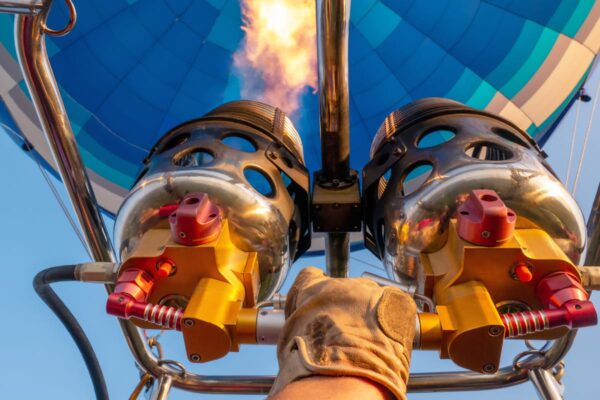
- Mounting the burner on the top part of the basket
- Checking the burner operation before attaching the envelope
- Laying out the envelope on the grass behind the basket
- Attaching the envelope to the lines and the basket frame
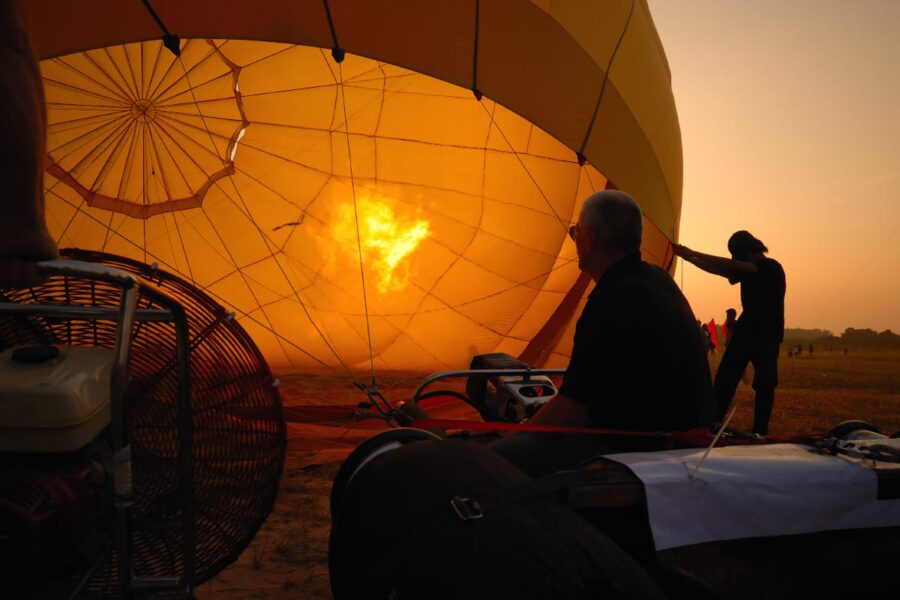
- Filling the envelope with cold air using a fan
- Starting the burner and heating the air
- Standing the balloon upright and preparing for takeoff
The ground crew holds the balloon by the lines at all times to prevent uncontrolled movement. The pilot coordinates every move and monitors the progress of the work.
Unpacking the envelope and attaching it to the basket
The balloon envelope is transported in a special bag and weighed before every flight season. After unpacking, the crew lays it out on the ground behind the basket, avoiding contact with sharp objects. The envelope fabric is durable but requires careful handling.
The lower part of the envelope, called the mouth, is large and serves as the air intake during inflation. The load-bearing lines connect the envelope to the basket frame. Every connection is checked by the pilot before inflation.
Filling the envelope with cold air using a fan
Filling the envelope with cold air is done using a gas-powered or electric fan. The device is placed in front of the envelope opening and directed straight into its interior. The fan is a standard piece of equipment for every ballooning crew.
When the envelope is about half-filled with cold air, it changes shape and begins to take form. The pilot and assistants hold the edge of the opening so that the air does not escape to the sides. Only after sufficient inflation can one proceed to the next stage, which is heating.
Heating the air with the burner and standing the balloon upright
Once the envelope is partially filled with cold air, the pilot starts the gas burner. A stream of hot air is directed through the opening directly into the interior of the envelope. After about 30 seconds of heating, the envelope begins to rise and assumes a vertical position.
During the standing process, one of the assistants holds the crown line, which is attached to the top of the envelope. This prevents the balloon from rising too abruptly and allows for control over the envelope’s behavior in wind gusts. The pilot regulates the intensity of the burner while observing the balloon’s reaction.
Securing the parachute valve at the top of the envelope
At the top of every professional balloon envelope, there is a parachute valve. It is used to quickly empty the envelope of hot air after landing, which stops the balloon on the ground. The pilot checks that the control line for the valve is correctly routed and connected to the basket.
The valve is closed from the inside by air pressure during the flight. Its proper securing is a key element of control. The correct attachment of the line is checked twice, before and after standing the balloon upright.
What a technical pre-flight inspection of a balloon and its equipment includes
A pre-flight technical inspection is a formal duty of every licensed pilot. It consists of a systematic check of the condition of all balloon components. Skipping any point may constitute a violation of aviation regulations.
Main areas of the pre-flight inspection:
- Envelope and its seams for mechanical damage
- Load-bearing ropes, carabiners, and rope locks
- Basket frame and floor
- Burners, valves, and gas hoses
- Propane tanks and their mounting
- Flight instruments and radio communication
- Emergency equipment and fire extinguisher
Each element of the inspection is documented by the pilot in the balloon’s technical logbook. Professional ballooning companies conduct additional seasonal inspections in accordance with the requirements of the Civil Aviation Authority.
Checking the condition of the envelope, ropes, and basket frame
The balloon envelope is made of a special nylon or polyester fabric, covered with a sealing coating. The pilot inspects every accessible part of the envelope for tears, burn marks, and seam damage. Even minor damage may qualify the balloon for repair before flight.
The load-bearing ropes connecting the envelope to the basket are inspected for fraying, knots, and damage to the carabiners. Every carabiner must be locked. The basket frame is checked for stability, and the floor for any cracks.
Checking gas tanks, hoses, and burners
Propane tanks are mounted inside the basket in special holders. The pilot checks each tank for leaks, visible damage, and proper securing with straps. The status of the pressure gauges must correspond to the values indicated in the operating manual.
The gas hoses connecting the tanks to the burners are inspected along their entire length. Signs of cracks, fraying, and connection leaks are checked. Burners are checked for the condition of the nozzles, coils, and ignition system.
| Equipment element | What is checked | Pass criteria |
|---|---|---|
| Balloon envelope | Seams, fabric, internal condition | No damage, no burn marks |
| Load-bearing ropes | Abrasions, carabiners | Locked, no signs of wear |
| Propane tanks | Pressure, mounting, tightness | Correct pressure, no leaks |
| Gas hoses | Cracks, connections | Tightness along the entire length |
| Burners | Nozzles, ignition, valves | Proper operation of all nozzles |
| Flight instruments | Calibration, power supply | Correct readings |
Verification of flight instruments and safety equipment
Every passenger balloon is equipped with an altimeter to measure altitude and a variometer to indicate vertical speed. The pilot checks the calibration of both devices before the flight. Well-calibrated instruments allow for precise management of flight altitude.
Safety equipment includes a fire extinguisher mounted in the basket in a visible and easily accessible location. The fire extinguisher is checked for its expiration date and pressure. The pilot also verifies the condition of the first aid kit and the radio device used for contact with the ground crew.
Tip: During the pre-flight inspection, a professional pilot uses a checklist with every item in a set order. Such a list eliminates the risk of missing any element, even with extensive experience.
Professional balloon flights for every occasion
Hot air balloon flights are one of those experiences that stay in your memory forever. ProBallooning organizes professional passenger flights for various groups and occasions. Every flight takes place with a licensed pilot, in accordance with Polish and European aviation law.
The company specializes in organizing passenger balloon flights over the Masovian region, offering several types of flights tailored to the needs of passengers.
Types of balloon flights offered by ProBallooning
Available flight options:
- Scenic hot air balloon flight for those wishing to admire the landscape of Masovia from the air in a small group
- Private hot air balloon flight for up to 5 selected people, with the option to individually choose the launch site
- Family hot air balloon flight intended for 2 adults and up to 3 children over 110 cm tall
- Engagement hot air balloon flight with a discreet setting for a marriage proposal at an altitude of several hundred meters
Each flight lasts about an hour and ends with an aeronaut baptism ceremony and a champagne toast. Passengers receive a commemorative certificate confirming the flight. ProBallooning pilots hold licenses issued by the Civil Aviation Authority and have many years of experience in sports and commercial aviation.
Check Professional passenger hot air balloon flights at ProBallooning




Customer reviews and contact
The experiences of hundreds of passengers confirm the high level of organization and safety of every flight. Authentic ProBallooning customer reviews are available on the company’s profile and serve as a reliable source of information before booking. Passengers appreciate the intimate atmosphere of small groups and the individual approach throughout the entire flight.
Planning a passenger hot air balloon flight is best started by contacting the specialists. Any questions about date availability, flight details, and participation conditions can be directed directly through the ProBallooning contact page. Booking is available online, and the date can be changed free of charge up to 3 days before the scheduled launch.
Check Printed vouchers for balloon flights as gifts at ProBallooning
What the passenger briefing looks like before entering the balloon basket
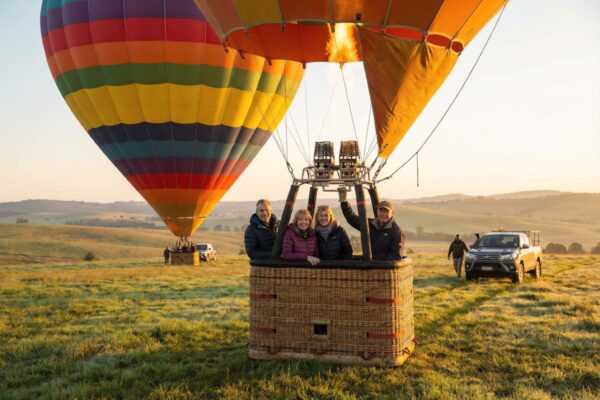
Just before takeoff, when the balloon is vertical and ready for flight, the pilot conducts a briefing for the passengers. It lasts a few minutes and is an essential part of every professional flight. Passengers learn how to behave safely while entering the basket, during the flight, and upon landing.
Safety instructions provided by the pilot
The pilot explains the safety rules clearly and without unnecessary technical details. Passengers learn how to properly enter the basket and where to keep their hands during the flight. Situations to avoid are discussed, such as sitting on the edge of the basket.
Information provided during the briefing:
- How to enter and exit the basket through the side openings
- Body position during landing
- Prohibition of touching burners and gas hoses
- Rules for using cameras and phones during the flight
- Pilot signals and how to respond to their commands
The pilot also points out where the fire extinguisher and basic emergency equipment are located in the basket. Passengers have the opportunity to ask questions before takeoff. Good communication before the flight builds trust and increases the comfort of the entire experience.
Rules of conduct during balloon takeoff and landing
The balloon takeoff is calm and almost imperceptible. The pilot asks passengers to stand straight and hold onto the handles inside the basket. Sudden movements and leaning over the edge are not allowed at any stage of the flight.
Landing a balloon is different from takeoff. The basket may touch the ground with some speed and tilt slightly. The pilot instructs passengers to adopt a position with slightly bent knees before landing, while holding onto the handles. This position minimizes the risk of injury.
Tip: The moment when passengers stand by the inflated balloon and feel the heat of the burner is a good time to get used to the sounds of the flight. The burner operates loudly, which may surprise people flying for the first time.
FAQ: Frequently asked questions
How long does it take to prepare a hot air balloon before takeoff?
Preparing a hot air balloon from the crew’s arrival at the site to the moment of takeoff takes about 25 to 30 minutes. The entire process follows a set sequence and includes laying out the envelope, filling it with cold air, and heating it with the burner.
Passengers can observe every stage up close. The pilot and ground crew work together to carry out every task efficiently and safely. Efficient cooperation of the entire team is a condition for a punctual takeoff and a safe flight.
What weather conditions are required for preparing and launching a balloon?
A passenger balloon flight takes place only in favorable weather. Before every flight, the pilot analyzes meteorological data and checks the wind speed and direction at ground level and at higher altitudes. The wind speed at takeoff should not exceed 10 km/h.
Storms, strong gusts, and an unstable atmosphere disqualify a flight even in nice weather. A good practice is for the pilot to release a small helium balloon, called a pibal, which shows the actual wind direction at a given location. The results of this observation are more accurate than the forecast itself.
Flights most often take place at dawn or before sunset. At these times, the atmosphere is the calmest, and conditions for a safe balloon flight are optimal.
What does the pilot check during the technical inspection of the balloon before the flight?
The pre-flight technical inspection of the balloon is a systematic check of every piece of equipment. The pilot checks the condition of the envelope for damage and burns, inspecting the seams and fabric. The load-bearing ropes and carabiners must be undamaged and properly locked.
A detailed inspection is also performed on the propane tanks, gas hoses, and burners. The pressure in the tanks, the tightness of the hoses, and the efficiency of the nozzles and ignition system are checked. Onboard instruments, such as the altimeter and variometer, must indicate correct values.
How is the passenger briefing conducted before entering the balloon basket?
Just before takeoff, the pilot conducts a short but essential briefing for all passengers. It lasts a few minutes and includes information on how to enter the basket, rules of conduct during the flight, and the correct landing position.
Passengers learn where the fire extinguisher and basic balloon emergency equipment are located in the basket. The pilot discusses the signals to respond to and warns against touching the burners and gas hoses. The landing position involves slightly bent knees and both hands holding the handles inside the basket. This posture minimizes the risk of injury upon contact with the ground.
Summary
Preparing a hot air balloon before a flight is a multi-stage process. It includes weather analysis, efficient equipment organization, a detailed technical inspection, and passenger briefing. Each of these stages serves one goal, which is a safe and successful flight.
A professional approach to every point of preparation determines the quality of the entire experience. An experienced pilot and an efficient ground crew ensure that a passenger balloon flight runs smoothly from the first moment of preparation until landing. Knowing these stages allows passengers to fully appreciate the effort and precision behind every ascent.
Sources:
- https://www.faa.gov/regulations_policies/handbooks_manuals/aviation/Balloon_Flying_Handbook_FAA-H-8083-11B/bfh_chapter_6.pdf
- https://www.us-ppl.de/pdf/faa/hb/balloon/faa-h-8083-11.pdf
- https://www.faa.gov/documentLibrary/media/Advisory_Circular/ac91-71.pdf
- https://data.ntsb.gov/Docket/Document/docBLOB?ID=40397079&FileExtension=.PDF&FileName=Flight+Manual+Extracts-Redacted.PDF
- https://www.caa.co.uk/commercial-industry/aircraft/operations/types-of-operation/guidance-for-balloon-operators/
- https://www.caa.co.uk/media/kzepbly4/oid-rmt-157-2-balloon-regulation.pdf
- https://www.casa.gov.au/sites/default/files/2023-08/guide-for-balloons-hot-air-airships.pdf
- https://edziennik.ulc.gov.pl/DU_ULC/2020/40/akt.pdf
- https://ulc.gov.pl/operacje-lotnicze/zezwolenia-zgloszenia-oswiadczenia-i-lotnictwo-ogolne/operacje-zarobkowe-przy-uzyciu-balonow
- https://ulc.gov.pl/_download/personel_lotniczy/lke/baloty_pyt260509.doc
- https://ulc.gov.pl/_download/lke/36_3_BFCL_balony_BPL_ST_PC.pdf