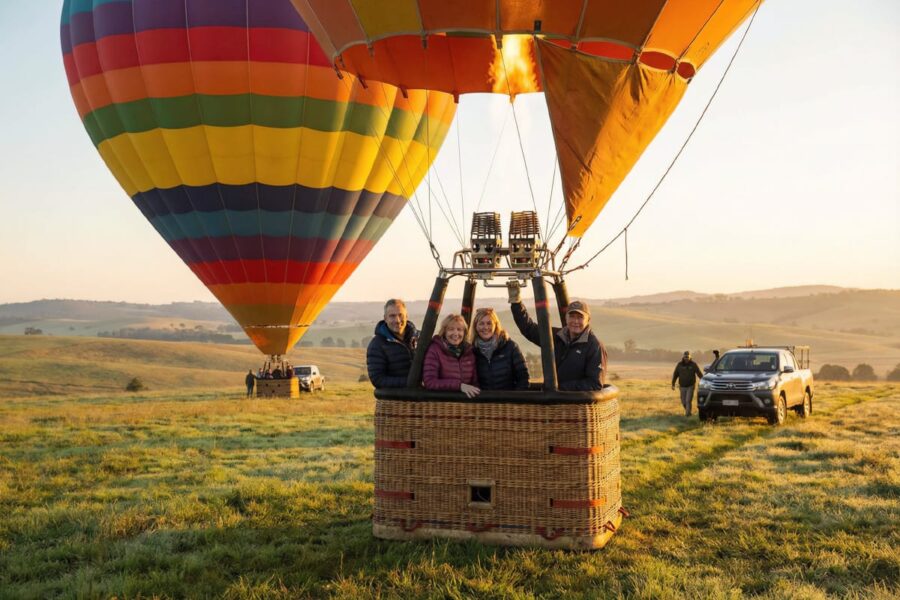
Balloon landing is the most exciting and demanding stage of the entire flight. The professional landing procedure requires precise coordination between the pilot, ground crew, and passengers. The process begins approximately 20 minutes before the planned end of the flight. The balloon pilot systematically assesses weather conditions and searches for a suitable landing spot.
Each landing presents a unique challenge due to variable weather conditions. Wind, temperature, and terrain influence the method of safe landing. Professional ballooning companies, such as PROBallooning, employ proven safety protocols. Passengers receive detailed instructions on proper behavior during landing.
The entire operation requires the pilot’s experience and efficient cooperation with the support team. The balloon basket may touch the ground in various ways, depending on the wind speed. Calm conditions allow for a gentle, upright landing. Stronger gusts may cause the basket to tip over, which is a normal procedure.
Choosing a landing site and controlled descent
The pilot begins searching for a landing area during the final phase of the flight. An altitude of approximately 150-200 meters allows for a precise assessment of available locations. The decision must be made quickly but with full consideration. The balloon descends at a speed controlled by managing the air temperature within the envelope.
An ideal landing site should be flat and free of obstacles. An open space minimizes the risk of collision with trees or buildings. Accessibility for the ground crew’s vehicles is another crucial factor. The pilot constantly communicates with the support team via radio.
Criteria for assessing terrain for a safe landing
A professional pilot analyzes each potential landing area based on several key factors. The first element is open space, allowing for the safe deployment of the envelope. The minimum area should be approximately 100 by 100 meters for a standard tourist balloon.
Main elements of terrain assessment:
- Absence of high-voltage power lines within a 200-meter radius
- Open space without tall trees and buildings
- Accessibility of access roads for the ground crew’s vehicle
- Flat or gently sloping terrain without ditches or structures
- Possibility of contacting the landowner before landing
Power lines pose the greatest risk during balloon landings. The pilot avoids such areas with a large safety margin. Even wires that are not visible from a distance can cause serious danger. Modern tourist balloons have an envelope height of 20 to 30 meters.
The ground surface is important for passenger comfort during landing. Soft ground, such as a meadow or cultivated field, cushions the landing better than a hard surface. The balloon basket transmits the impact force to everyone present upon contact with the ground. Properly prepared passengers can minimize the sensation of this moment.
Pilot Techniques for Controlling Descent Rate
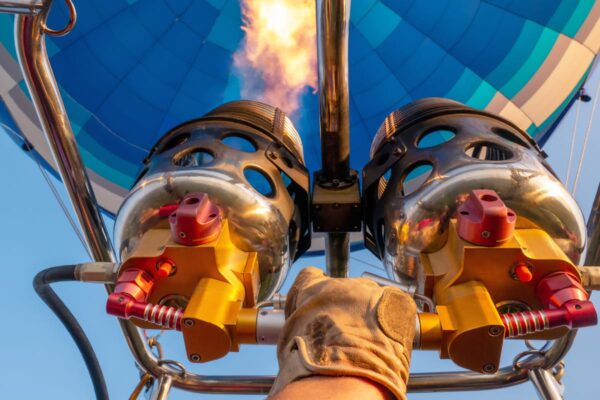
Controlling the descent rate is a crucial skill for any experienced pilot. The balloon burner allows for heating the air and slowing the descent. Reducing the flame intensity causes the gas to gradually cool. The balloon naturally begins to descend as the temperature of the air inside the envelope decreases.
The pilot also utilizes a parachute valve located at the top of the balloon. Opening this mechanism releases hot air directly into the atmosphere. Controlled venting allows for a faster descent without abrupt movements. This technique requires precision and experience in assessing current conditions.
Methods for Controlling Descent Rate:
- Adjusting burner intensity from full power to complete shutdown
- Opening the parachute valve for a specific duration and range
- Utilizing wind layers at different speeds
- Short heating bursts to maintain a stable descent
- Monitoring vertical speed with a variometer
Experienced pilots can anticipate the balloon’s behavior several tens of seconds in advance. The delay in the envelope’s reaction to the burner’s action is approximately 3-5 seconds. The landing procedure requires preemptive planning of every action. Abrupt maneuvers can cause passenger discomfort and safety hazards.
The optimal descent rate in the final phase of flight is between 1 and 3 meters per second. In calm conditions, the pilot aims for the gentlest possible touchdown. Wind speeds above 15 kilometers per hour require more dynamic actions.
Communication with the Ground Crew During Location Scouting
The ground support team tracks the balloon from launch to the end of the flight. Radio communication enables the transmission of current information about the pilot’s position and plans. The crew travels in vehicles, attempting to reach the predicted landing site. Effective communication shortens the time between touchdown and the arrival of assistance.
The pilot provides information about the flight direction and estimated distance. The ground crew reports on ground conditions and available access roads. Cooperation allows for the selection of an optimal landing area from several possibilities. The GPS system aids navigation and facilitates balloon localization.
Key Elements of Radio Communication:
- Transmitting current altitude and descent rate every 2-3 minutes
- Informing about visible landmarks and roads
- Confirming the crew’s readiness to provide support at a specific location
- Warning about obstacles not visible from the air
- Coordinating the procedure for contacting the landowner
Professional crews use specialized telemetry systems. These devices automatically transmit the balloon’s position data every few seconds. This technology significantly improves coordination and enhances the safety of the entire operation. The pilot can focus on steering, knowing that the team is aware of their exact location.
Impact of Wind Conditions on Landing Site Selection
Wind is a decisive factor in choosing the landing site and method. Calm conditions with speeds below 10 kilometers per hour allow for a standing landing. A tourist balloon can then gently touch the ground and remain in an upright position. Passengers will barely feel the moment of contact with the surface.
Wind speeds of 10-20 kilometers per hour require greater caution. The basket may bounce a few times after landing or move a distance of several meters. The pilot instructs passengers to assume the proper protective position. The ground crew must quickly stabilize the balloon after it touches down.
| Wind Speed | Landing Type | Pilot Actions | Passenger Preparation |
|---|---|---|---|
| 0-10 km/h | Standing Landing | Gentle descent, minimal venting | Slight knee bend, holding handles |
| 10-20 km/h | Drift Landing | Controlled descent, rapid deflation | Squatting position, firm grip |
| 20+ km/h | Basket Tip-over | Quick touchdown, immediate deflation | Full squat, back against the seat |
Stronger gusts above 20 kilometers per hour significantly complicate the landing procedure. The balloon basket may tip over on its side upon contact with the ground. This situation is anticipated and safe for properly prepared passengers. The pilot conducts a detailed safety briefing before the flight’s departure.
Wind direction affects the ability to reach the chosen landing site. The balloon can only be controlled vertically, moving horizontally with the airflow. The pilot utilizes differences in wind direction at various altitudes. Changing altitude by a few dozen meters can completely alter the flight path.
Safety Instructions Provided to Passengers Before Landing
Each passenger receives precise instructions for a safe landing before entering the basket. The pilot conducts a briefing, explaining all possible landing scenarios. Information includes the correct body position, how to hold the handles, and rules for staying in the basket. Understanding these procedures minimizes the risk of injury and reduces landing-related stress.
Approximately 5-10 minutes before landing, the pilot reiterates key safety rules. Passengers are signaled to assume their positions and secure personal belongings. The professional procedure involves repeating the most important instructions multiple times. The pilot verifies that each person understands and adheres to the guidelines.
Correct Body Position During Balloon Landing
The correct landing position is a fundamental element of passenger safety. The body should be slightly bent at the knees, maintaining leg flexibility. Feet placed close together ensure stability and even distribution of forces. The back resting against the padded wall of the basket protects the spine from sudden impact.
Elements of the Correct Landing Position:
- Feet together and knees slightly bent to absorb impact
- Back resting flat against the inner wall of the balloon basket
- Head slightly tilted forward, chin to chest
- Arms holding the handles in a natural, relaxed position
- Body weight evenly distributed on both legs
This position minimizes the risk of injury during any type of landing. Bent knees absorb impact energy better than stiff legs. Resting the back prevents leaning backward during basket movement. Balloon passengers practice this position before takeoff, which eliminates confusion during landing.
In the event of a basket tip-over landing, the position remains the same. Maintaining the correct posture protects against hitting the head on equipment. The basket may tip in any direction, depending on the wind. The pilot informs passengers of the tipping direction a few seconds before ground contact.
How to Hold the Inner Basket Handles
Inner handles are specially designed safety features in every tourist basket. They are located along the upper edge of the walls in easily accessible places. They are made of strong ropes or straps, capable of withstanding significant loads. A proper grip ensures stability and safety throughout the landing procedure.
Hands should grip the handles naturally but firmly. Excessive tightening causes rapid muscle fatigue and discomfort. Holding too loosely can lead to a loss of balance upon impact. Hands placed at chest level provide optimal control over body position.
Key principles for holding the handles:
- Grip the handles with both hands shoulder-width apart.
- Keep elbows close to the body for greater stability.
- Avoid touching the burner and valve control lines.
- Do not insert fingers into loops or structural openings.
- Maintain your grip at all times until instructed to exit the basket.
The pilot will indicate the correct handles during the pre-flight briefing. Some basket components are for technical purposes and cannot be used as handholds. Fuel lines, burner hoses, and valve control ropes must remain clear. Grabbing the wrong elements can interfere with the pilot’s operation or cause equipment damage.
Securing Cameras and Personal Items
Cameras and phones are the most common items brought on a balloon flight. During balloon landing, they can fall and be damaged or injure other passengers. All devices should be secured with wrist or neck straps. Loose items should be stowed in pockets or a backpack a few minutes before touchdown.
Sunglasses require additional security with a lanyard. Hats and caps should be tightened or removed before landing. Jewelry such as earrings and necklaces can snag on basket components. The pilot will ask passengers to check their belongings before assuming the landing position.
Equipment securing procedure:
- Secure cameras in cases or zippered pockets.
- Attach action cameras and phones with safety straps.
- Stow backpacks and bags at the bottom of the basket between your legs.
- Remove loose clothing items like scarves.
- Ensure nothing protrudes beyond the edges of the basket.
Some ballooning companies, such as ProBallooning, provide waterproof containers for valuables. This solution protects equipment from damage regardless of the landing type. Passengers can focus on enjoying the experience without worrying about the safety of their belongings.
Rules for Staying in the Basket Until Instructed by the Pilot
Exiting the basket before the pilot’s permission poses a serious safety risk. The balloon after landing may still contain hot air and tend to lift. Reducing weight by one person exiting can cause a sudden ascent. Other passengers and the pilot could be put in a dangerous situation.
The pilot is the only person who assesses when the balloon is completely secured. Deflation of the envelope, stabilization by the ground crew, and securing of the lines must be completed. This process typically takes 2 to 5 minutes after touching down. Passengers remain in their positions until given a clear signal.
During landing with a basket tip-over, passengers may lie on their side for a moment. This situation is normal and safe. The pilot instructs each person individually on the order and manner of exiting the basket. Exiting is done one person at a time, with caution towards others.
Tip: Before your first balloon flight, it’s a good idea to practice the landing position at home. Standing with your back to a wall, knees bent, and head slightly tilted will help you remember the correct posture.
Role and Tasks of the Ground Crew During Landing Operations
The ground crew is an essential element of every professional tourist balloon flight. The team typically consists of 2-4 people equipped with a specialized vehicle. Their work begins long before takeoff and ends after the equipment is completely packed. Coordination between the crew and the pilot determines the safety and efficiency of the entire landing operation.
Professional companies like ProBallooning invest in training support teams. Crew members are familiar with safety procedures and have the skills to operate ballooning equipment. Their experience translates into passenger comfort and operational efficiency. A well-trained crew can secure the balloon in difficult terrain conditions.
Tracking the Flight Path and Preparing the Landing Site
The ground team begins tracking the balloon immediately after takeoff. The flight path depends on the wind direction and can cover a distance of 5 to 30 kilometers. The crew travels by road, trying to predict the probable landing site. GPS systems and radio communication enable precise determination of the balloon’s position.
Approximately 15-20 minutes before the planned landing, the crew arrives in the landing area. Team members observe the balloon and analyze possible touchdown points. Contacting the landowner is an important part of the preparations. The crew explains the situation and asks for permission for a brief stop.
The support vehicle is parked at a safe distance from the anticipated landing site. Crew members take positions that allow for a quick reaction after landing. They prepare ropes and equipment needed for stabilizing and deflating the balloon. Communication with the pilot allows the team’s position to be adjusted in real-time.
Stabilizing the Basket by Crew Members After Touchdown
The moment the balloon basket touches the ground requires an immediate reaction from the ground crew. Team members run up and grab special ropes or the edges of the basket. Their task is to stop the movement and prevent tipping over in moderate winds. Stabilization requires coordination and physical strength, especially with larger balloons.
Basket Stabilization Procedure:
- Grasping the tether lines or the top edge of the basket with both hands
- Using body weight for increased stability
- Coordinating actions with other crew members through voice commands
- Maintaining grip until the envelope is completely deflated
- Assisting passengers in exiting the basket after the pilot’s signal
In stronger winds, the crew may not be able to prevent the basket from tipping over. This situation is anticipated and does not pose a safety issue. The team then secures the basket in a lying position and assists with passenger evacuation. The safety of all flight participants remains the priority.
After the passengers have exited the basket, the crew proceeds with deflating the envelope. The pilot opens the parachute valve, allowing hot air to escape rapidly. Crew members help arrange the fabric, preventing it from being dragged across the ground on a windy day. The entire operation requires efficiency and knowledge of procedures.
Radio communication between the pilot and the ground support team
The radio communication system is a fundamental coordination tool throughout the entire flight. The pilot and the crew use portable radios on a dedicated frequency. Radio communication enables real-time information exchange without delays. The quality of communication directly impacts the safety and efficiency of operations.
The pilot provides updates every few minutes during the final phase of the flight. Information includes altitude, descent rate, and visible landmarks. The ground crew reports their position and ground conditions in the landing area. The two-way communication system allows for quick problem-solving.
| Flight Stage | Communication Frequency | Pilot’s Message Content | Crew’s Message Content |
|---|---|---|---|
| 30 min before landing | Every 5-10 minutes | Position, altitude, direction | Vehicle location, access route |
| 15 min before landing | Every 3-5 minutes | Planned location, descent rate | Ground conditions, accessibility |
| 5 min before landing | Every 1-2 minutes | Final location, instructions | Confirmation of readiness |
| During landing | Continuous | Stabilization commands | Action confirmations |
Modern telemetry systems automatically transmit balloon position data. The crew can track the route on a digital map in real-time. This technology complements traditional voice communication and increases precision. Backup systems ensure communication even if the main radio fails.
Tip: Passengers can ask the pilot to clarify radio communications after landing. Understanding the coordination process enhances awareness of the complex logistics of a professional balloon flight.
Types of Tourist Balloon Landings and Their Characteristics
Balloon landings can occur in several different ways depending on meteorological conditions. Each type of touchdown requires a different piloting technique and passenger preparation. Experienced pilots can predict the type of landing even before beginning descent. This information allows for proper preparation of all flight participants.
Calm weather conditions favor a gentle standing landing, similar to exiting an elevator. Moderate wind causes a landing with a short slide on the ground. Stronger gusts may require a landing with the basket tipping over to its side. Each scenario is included in the safety procedures and is completely controlled.
Standing Landing in Calm Weather Conditions
The most comfortable touchdown occurs with winds below 5 miles per hour (8 kilometers per hour). The balloon basket touches the ground gently and remains in a vertical position. Passengers often do not feel the moment of contact with the surface. The pilot precisely controls the descent speed until the last second of the flight.
The standing landing process begins at an altitude of approximately 50 meters. The pilot systematically reduces the air temperature in the envelope, slowing the descent. Short bursts from the burner prevent excessively rapid descent. The balloon covers the last few meters at a speed of about 0.5-1 meter per second.
Upon touching the ground, the basket may bounce slightly once. Passengers feel a gentle jolt, similar to a bus stopping. The pilot immediately opens the deflation valve, releasing hot air. The ground crew stabilizes the basket, holding it in a vertical position until the envelope is completely empty.
Advantages of a Standing Landing:
- Minimal discomfort for passengers of all age groups
- Easy exit from the basket without assistance
- No risk of equipment shifting inside the gondola
- Possibility of immediately commencing the ballooning tradition celebration
- Clean clothing and no contact with the ground for participants
A standing landing is the goal of every professional tourist balloon pilot. However, it requires ideal atmospheric conditions, available in only about 40-50% of flights. The pilot always prepares passengers for other landing possibilities as well. Flexibility and readiness for different scenarios ensure safety.
Landing with a Short Drag in Moderate Wind
A wind speed of 10-18 kilometers per hour causes the basket to drag along the ground. The balloon touches down and slides for several more meters. Passengers experience a series of gentle bounces as they make contact with the ground. The pilot maintains partial control over the horizontal speed until deflation.
The procedure begins similarly to a standing landing. The pilot selects a long, open area free of obstacles in the direction of the drag. The wind direction determines which way the basket will move. This information is communicated to the passengers several seconds before touchdown.
The initial ground contact occurs at a vertical speed of 1-2 meters per second. The basket bounces and continues to slide in the direction of the wind. The pilot may use a short burst from the burner to soften the next impact. The ground crew running alongside tries to catch the basket and stop the drag.
Passengers maintain a safety position throughout the entire drag phase. Bent knees absorb the subsequent bounces and impacts with the ground. Deflation of the envelope begins immediately after the first contact. The decrease in lift quickly stops the drag within 5-15 seconds.
Basket Tipping Over Sideways as a Standard Procedure in Stronger Gusts
In winds exceeding 18-20 kilometers per hour, the balloon basket will inevitably tip over onto its side. This situation is a normal operating procedure, anticipated in the design of every balloon. The basket’s construction protects passengers from injury during the tilt. Properly prepared flight participants are completely safe.
The pilot informs passengers of the inevitable tip-over approximately one minute before landing. Everyone assumes a full squat position with knees bent firmly. Their backs are against the basket wall, and their hands hold the handles close to their bodies. This position minimizes the risk of hitting their heads on structural elements.
Landing Sequence with a Tip-Over:
- Initial ground contact at a horizontal speed of 20-30 km/h
- Short basket drag for 2-5 meters
- Basket tilt in the direction of the wind
- Controlled tip-over onto the side
- Rapid deflation of the envelope by the pilot and crew
During the tip-over, passengers may experience a sensation of rotation. The process typically lasts 2-3 seconds from initial contact to lying on the side. The basket rests stably, secured by the ground crew. The pilot is the first to exit the gondola and assists passengers with disembarking.
Exiting the tipped-over basket is done individually over the top edge. The crew helps each person by climbing onto and off the structure. The entire evacuation procedure takes about 3-5 minutes and proceeds calmly. Passengers often recall this experience as the most exciting part of the flight.
Preparing Passengers for Various Landing Scenarios
A comprehensive pre-flight safety briefing covers all possible landing types. The pilot explains each scenario and demonstrates correct body positions. Passengers have the opportunity to ask questions and clarify any doubts. Understanding the procedures significantly reduces stress associated with the unpredictability of landing.
Key elements of passenger preparation:
- Demonstration of three main landing positions adapted to conditions
- Indication of correct grips and explanation of their functions
- Discussion of audible signals and pilot gestures during landing
- Instructions on securing equipment and personal belongings
- Explanation of the procedure for exiting the basket with each type of landing
Experienced pilots use humor and a positive attitude during briefings. An atmosphere of safety and professionalism reassures nervous participants. Some companies, like PROBallooning, offer video materials showing different types of landings. Visualization helps passengers better understand and remember procedures.
Just before landing, the pilot reminds passengers of key safety elements. Passengers receive clear instructions for the specific type of landing. This information allows them to assume the correct position several seconds before contact. The pilot’s calm and confident tone contributes to the comfort of everyone in the basket.
Tip: Individuals with mobility limitations should inform the pilot before the flight. Professional companies adapt landing procedures and provide additional assistance to ensure the safety of all passengers.
Professional Hot Air Balloon Flights with ProBallooning
ProBallooning has specialized in organizing hot air balloon flights over Mazovia for many years. Experienced pilots hold licenses from the Civil Aviation Authority and have hundreds of flight hours. Every flight adheres to the highest safety standards of European aviation. Passengers receive comprehensive service from the moment of booking to the post-landing ceremony.
Small groups of up to 8 people ensure comfort and space during the aerial journey. A one-hour flight over the Masovian Lowland allows for admiration of the Vistula River and the Bolimów Landscape Park. The traditional ceremony includes a champagne toast and commemorative certificates for the first flight. Flexible booking conditions allow for free rescheduling up to 3 days before departure.
Experienced Pilots and Professional Crew
The company’s founder is a pilot with over eight years of experience and approximately 500 completed flights. He regularly participates in Polish Cup and World Championship competitions. His membership in the Polish National Team for gas ballooning confirms his highest qualifications. The second pilot is from Brazil, where ballooning has been a family tradition for three generations.
Both pilots gained experience during balloon festivals on different continents. Their training includes safety procedures and the operation of the latest generation aviation equipment. Regular competency checks ensure the maintenance of the highest piloting standards. A passion for flying and professionalism create an atmosphere of safety during every flight.
Diverse Flight Options for Every Occasion
The offer includes scenic flights for those wishing to experience ballooning for the first time. Private flights allow for an intimate journey with a maximum of 5 chosen companions. Family adventures are designed for 2 adults and up to 3 children. Engagement flights provide an unforgettable proposal scenario at an altitude of several hundred meters.
Each flight begins with a safety briefing and the opportunity to assist in preparing the balloon. Passengers actively participate in setting up the envelope and filling it with hot air. The aeronaut’s christening ceremony combines 18th-century tradition with modern adventure celebration. Transfer from Warsaw is optionally available for those who value convenient transportation.
Positive Reviews and Satisfied Passengers
Clients appreciate the individual approach and support at every stage of the flight. The comfort provided by small groups receives special recognition in reviews. Flexibility in rescheduling and transparent booking policies with no hidden fees are key advantages. Quick flight execution without long waits convinces customers to choose ProBallooning.
The professionalism of the pilots and their ability to create a magical atmosphere during the flight receive the highest ratings. The traditional ceremony and commemorative certificates remain memorable as unique elements of the experience. Passengers emphasize the sense of safety and comfort throughout the adventure. Numerous positive reviews confirm the high quality of services and participant satisfaction.
Booking is available through the online calendar on the company’s website. Checking current prices and available dates takes just a few moments. A phone consultation allows for clarification of any doubts before making a choice. Contact the ProBallooning office to fulfill your dream of a balloon flight over Mazovia.
Activities Performed After Landing
The moment of touchdown marks the beginning of the final phase of the balloon adventure. Deflating the envelope and packing the equipment are equally important elements as the flight itself. The ground crew and pilot perform a precise sequence of actions. Passengers often have the opportunity to assist in folding the balloon. Participation in this process deepens the understanding of ballooning technology and tradition.
The complete packing of the balloon usually takes 20 to 40 minutes. The time depends on the size of the envelope, the number of people helping, and the weather conditions. Wind makes it difficult to lay out the material and requires greater care. An experienced crew efficiently coordinates activities, utilizing the help of willing passengers.
Deflation of the Balloon Envelope and Material Layout
The deflation process begins immediately after the basket is stabilized by the ground crew. The pilot opens the parachute valve at the top of the envelope to its maximum width. Hot air quickly escapes, causing the material to descend. The balloon envelope gradually loses its shape and falls to the ground within 3-5 minutes.
Crew members approach the descending envelope and begin to lay it out. The material must be folded in a way that prevents it from being torn by the wind. A special folding technique protects the delicate fabric from damage. The envelope is stretched along the direction of the wind and systematically folded.
Stages of Envelope Deflation and Layout:
- Opening the deflation valve and releasing hot air
- Spreading the descending envelope along the direction of the wind
- Pulling out and straightening all material pleats
- Folding the envelope from top to bottom in a concertina method
- Securing the folded material with straps to prevent unfolding
A standard tourist balloon envelope weighs between 80 and 150 kilograms. The material is smooth and can be slippery after contact with dew. The work requires the coordination of several people simultaneously pulling and laying out the fabric. The crew directs the process, instructing passengers on proper assistance techniques.
After folding, the envelope is placed into a special transport bag. Compressing the material requires the strength and patience of the entire team. A properly packed envelope occupies approximately 1.5-2 cubic meters of volume. The bag is secured with straps and loaded onto the support vehicle.
Passenger Assistance with Packing Balloon Equipment
Participating in packing the balloon is a traditional element of the ballooning experience. Most passengers enthusiastically accept the offer to help the crew. Teamwork creates a sense of community and allows for a closer look at the technical side of ballooning. Packing the balloon provides an opportunity for closer contact with the materials and structure.
The pilot or crew members explain tasks suitable for individuals without experience. Simple actions like holding the material or carrying lighter components do not require specialized knowledge. More complex operations remain the responsibility of trained team members. Safety and equipment protection are always the priority.
Passengers help hold the edges of the envelope during its layout. They prevent the material from being blown away by the wind by weighing it down with their own bodies. They also assist in carrying the basket to the transport vehicle. This work requires cooperation and synchronization of the entire group’s movements.
Tasks for Passengers During Packing:
- Holding the edges of the envelope during packing
- Assisting with compressing the material into the transport bag
- Transporting gas cylinders and lighter equipment
- Gathering and folding ropes and safety straps
- Loading items into the support vehicle
Some individuals prefer to observe the process without active participation. The pilot and crew respect this choice, refraining from any pressure. Observation itself provides valuable insights into the balloon’s operation. Passengers are welcome to ask questions and take photos of the packing process.
Celebration of a Successful Flight According to Ballooning Tradition
The tradition of the balloonist’s toast dates back to the origins of balloon flights in the 18th century. The first aeronauts celebrated every successful landing with champagne and the local population. The flight celebration upholds this centuries-old tradition and creates a unique atmosphere. Modern tourist flights continue the custom, often with additional elements.
After the equipment is completely packed, passengers gather for a ceremony. The pilot shares a brief history of ballooning traditions and their significance. Champagne or another beverage is opened and poured into glasses. A toast is raised to the successful flight and safe return to earth.
Some companies, such as ProBallooning, present commemorative certificates for the first flight. The document includes the date, launch location, and pilot’s signature. It serves as a beautiful memento of an extraordinary experience and can be framed. Passengers often pose for photos with their certificates against the backdrop of the packed balloon.
Elements of the Traditional Celebration:
- A toast with champagne or a non-alcoholic beverage for all participants
- Recitation of the traditional Balloonist’s Prayer by the pilot
- Presentation of certificates confirming the flight
- Group photos with the pilot and ground crew
- Stories about the history of ballooning and interesting flight anecdotes
The ceremony typically lasts 10-15 minutes and concludes the entire experience. Passengers share their impressions and exchange contact information with new acquaintances. An atmosphere of joy and fulfillment accompanies all participants. Professional companies ensure that the celebration is conducted with respect for tradition.
Transportation from the landing site to the starting point is provided by the crew’s vehicles. The journey offers an opportunity for relaxation and further conversation about the experiences. Passengers often receive information about future flight opportunities. Many individuals decide to repeat the ballooning experience after their first successful flight.
Tip: Passengers planning a balloon flight can familiarize themselves with the Balloonist’s Prayer beforehand. Knowing the traditional words allows for fuller participation in the ceremony and a greater appreciation for the historical roots of modern tourist ballooning.
Summary
The balloon landing procedure requires precise coordination among the pilot, ground crew, and passengers. The process begins during the flight itself, as the pilot searches for a suitable landing area. Wind conditions determine the type of landing, ranging from a gentle standing landing to a controlled basket tip-over. Every scenario is accounted for in the safety protocols of professional ballooning companies.
Passengers play a crucial role in a safe landing by following instructions. Proper body position, holding onto handles, and remaining in the basket until instructed are fundamental. The ground crew provides stabilization and support at the critical moment of touchdown. The cooperation of all elements ensures the safety and comfort of every flight.
The traditional post-landing celebration highlights the uniqueness of the ballooning experience. The ceremony, with a toast and certificate presentation, connects the present with centuries of history. Hot air ballooning remains an unforgettable experience, the safe conclusion of which requires professionalism and respect for procedures. Awareness of the complexity of landing operations deepens appreciation for the pilot’s and support team’s skills.