Hot air balloon flights evoke a lot of emotions and fascination. At the same time, they are surrounded by numerous myths and misconceptions. Most people have never had the chance to experience such an adventure personally. Opinions about balloons are often based on imagination rather than facts.
Safety, control, and comfort during a hot air balloon flight are often perceived very differently from how they actually are. Fear of heights, concerns about sudden drops, or the belief in extreme sensations deter potential passengers. However, reality is quite different from popular perceptions.
Knowledge about the actual flight conditions allows for an informed decision. Dispelling doubts makes the adventure accessible to a wider audience. Learning the truth about balloons opens the door to an unforgettable journey.
Myths about hot air balloon flight safety
Balloon safety is often judged based on emotions rather than data. Most people believe that hot air balloon flights are among the most dangerous forms of transportation. However, statistics tell a completely different story. The actual data surprises even skeptics.
Safety concerns are the main barrier to deciding to fly. Fear arises from thoughts of burner failure, sudden drops, or lack of control over the balloon. The actual risk is minimal compared to other means of transportation.
Are balloons among the most dangerous means of transportation?
A hot air balloon is one of the safest ways to fly. Data from the U.S. Federal Aviation Administration database clearly confirms this claim. Since 1964, only 775 accidents have been recorded in the United States. Only 70 of these resulted in fatalities.
Key safety factors:
- Simple mechanical design without complex systems
- No combustion engine prone to failure
- Natural physical phenomena as lift propulsion
- The ability to descend in a controlled manner even if the flame goes out
- Regular technical inspections and pilot certification
The balloon’s design is based on basic laws of physics. Hot air naturally rises, making the entire system almost fail-safe. In Poland after 1945, there has been practically one serious fatal pilot accident recorded. National statistics are therefore even more favorable than global ones.
The myth of sudden balloon drop due to burner failure
The belief in a sudden drop during burner failure is one of the most entrenched misconceptions. A balloon does not fall like a stone even if the burner flame goes out completely. The air inside the envelope cools gradually over several tens of minutes. Descent happens slowly and in a controlled way.
The pilot has full control over the situation. Backup gas cylinders ensure continuous operation of the system. The safety system includes several independent flame sources. Even with total failure of one burner, others operate without disruption. The balloon envelope retains heat long enough for the pilot to find a safe landing spot.
Slow descent allows time for proper preparation for landing. The pilot selects an open area, communicates with the ground, and instructs passengers. The entire process proceeds calmly and predictably. The actual risk is therefore much lower than in most other forms of air transport.
The truth about accident statistics during commercial flights
Studies conducted between 2013 and 2017 provide concrete numerical data. There were 12 accidents recorded during logged flight hours. The rate was 14.8 accidents per 100,000 flight hours. These incidents resulted in 33 serious injuries and 3 fatalities.
Most accidents occurred during landing, not in flight. Studies from 2000 to 2011 covered 78 accidents during commercial tourist flights. A total of 518 people were involved. There were 91 serious injuries reported, mainly fractures of the lower limbs, and 5 deaths.
Typical causes of accidents:
- Hard landing in strong wind: 58.3% of cases
- Contact with trees or power lines: 26 incidents
- Fuel system problems: 4 accidents
- Damage to the canopy or valves: 5 incidents
The statistics show that the flight itself is extremely safe. The risk is mainly concentrated at the landing stage. Experienced pilots minimize risk through careful analysis of weather conditions. Commercial flights in Poland have an even higher level of safety than the global average.
Are balloon flights safer than airplane travel?
Comparing the safety of different forms of air transport requires consideration of many factors. Balloons feature a simple mechanical design without advanced electronic systems. This simplicity translates into fewer components prone to failure. Airplanes, on the other hand, have hundreds of complex components requiring synchronization.
| Type of Transport | Accidents per 100,000 Hours | Main Causes of Accidents | Fatality Rate |
|---|---|---|---|
| Hot Air Balloon | 14.8 | Hard landing, weather conditions | Very low |
| Commercial Airplane | 0.2-0.5 | Human error, technical failures | Low |
| Private Airplane | 6.5-8.0 | Pilot error, poor conditions | Medium |
| Tourist Helicopter | 15-20 | Mechanical failures, weather | High |
Data indicates that balloons are safer than tourist helicopters and private airplanes. Commercial airlines have slightly better statistics than balloons. However, the difference results from the different nature of operations. Balloons fly in calm weather conditions at dawn or dusk. Airplanes operate in all conditions and circumstances.
A key difference is also the nature of potential accidents. Even in the event of a collision, a balloon rarely suffers total destruction. The envelope cushions impacts, protecting passengers from serious injuries. In aviation with airplanes, accidents are rarer but usually more tragic in outcome.
Misconceptions about balloon control and navigation
Many people imagine controlling a balloon like piloting an airplane or helicopter. The lack of visible controls causes anxiety and doubts. Passengers fear lack of control over the flight path. However, reality is much more complex and fascinating.
The balloon pilot uses natural atmospheric phenomena for precise navigation. Changes in altitude allow access to different wind layers. Each layer has a different direction and speed. Skillful use of these differences enables route planning.
Balloon navigation requires deep meteorological knowledge and experience. Pilots analyze weather forecasts several days before the flight. Pre-flight measurements of winds at various altitudes are standard procedure. This process is more complicated than simply steering a rudder.
Can a pilot steer a balloon freely like an airplane?
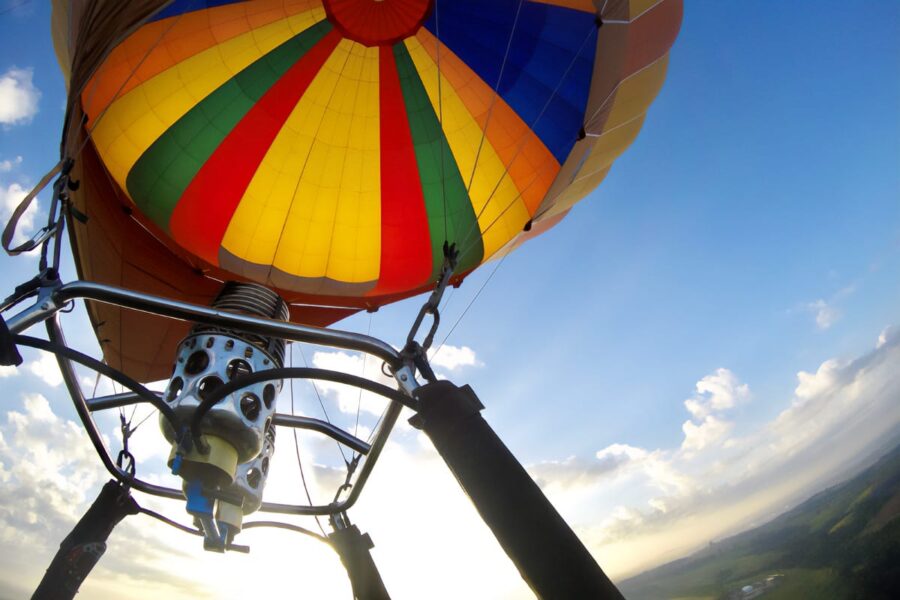
A balloon does not have a rudder or propulsion engine allowing horizontal direction changes. The pilot controls only vertical movement by regulating the air temperature inside the envelope. Increasing burner intensity causes ascent. Reducing or extinguishing the burner results in descent.
Basic elements of balloon control:
- Burner regulating air temperature
- Release valve for rapid cooling of the envelope
- Meteorological instruments measuring wind
- GPS system for position tracking
- Radio for communication with the ground
Flight control is achieved by selecting the appropriate wind layer. Changing altitude by just a few dozen meters can completely change the direction of movement. The pilot continuously monitors conditions and adjusts flight level. This method requires skill and patience.
How using different wind layers enables navigation
Wind at different altitudes blows in varying directions and speeds. For example, at 300 meters altitude, the wind may blow eastward. At 800 meters, the same area may have a southern wind. This difference results from varied terrain topography and thermal phenomena.
The pilot analyzes meteorological forecasts for individual flight levels before flying. An experienced pilot can predict where favorable conditions will be found. During flight, they continuously test different altitudes, observing changes in direction. Gradual ascent or descent allows precise route tuning.
The most noticeable differences in wind direction occur in the morning hours. Nighttime cooling creates stable air layers with different parameters. Thermals appearing with sunrise further modify the airflow. These phenomena provide the pilot with many navigational options.
The Myth of Complete Lack of Control Over Flight Path
The belief that a balloon drifts randomly is not supported by facts. An experienced pilot can steer the route with an accuracy of several hundred meters. Of course, this is not the precision of an airplane, but the control is significant. Proper use of wind layers allows achieving the intended goal.
Modern technology supports the navigation process. GPS systems show the current position and speed. Weather forecasts are available in real time. Radio communication with the ground enables receiving information about winds. All these tools increase steering precision. Pilots regularly land in designated areas despite the lack of mechanical steering. This skill requires years of practice and thorough knowledge of local weather conditions. Commercial flights are always planned considering preferred landing zones. The effectiveness of this approach confirms that control is greater than commonly believed.
Can Balloons Fly Over Urban Areas
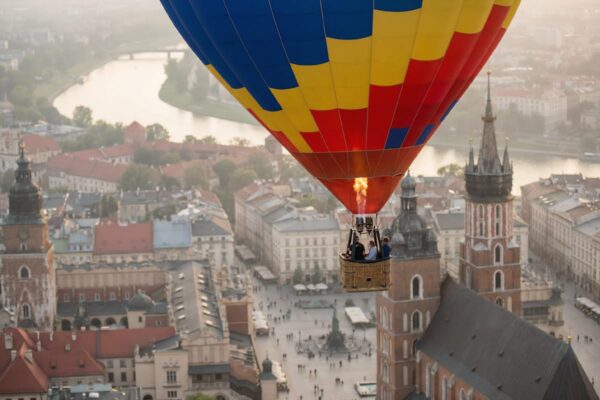
Flights over cities are technically possible and regularly conducted in many locations. However, they require meeting specific safety conditions. A key factor is appropriate landing zones within or on the outskirts of the city. The pilot must have access to open park areas or sports fields.
Aviation regulations govern minimum flight altitudes over buildings. The balloon must maintain a safe distance from buildings and structures. Power lines pose the greatest threat in urban areas. Precise knowledge of topography and infrastructure is essential.
Many cities organize balloon festivals attracting thousands of spectators. These shows prove that urban flights are safe with proper preparation. Pilots undergo additional training regarding navigation in complex conditions. Increased oversight by air traffic services provides extra safety.
Tip: Before booking a flight, it’s worth asking the operator about typical routes. Experienced pilots gladly share information about planned flight areas. This knowledge helps better prepare for the adventure and know what to expect.
Common Myths Related to Weather Conditions
Weather conditions are crucial for flight safety and comfort. Many people mistakenly assume that balloons can fly in any conditions. The truth, however, is more complicated. Weather requirements are very strict and precise.
Pilots analyze forecasts several days before the planned launch. Temperature, humidity, wind speed, and atmospheric stability must meet specific criteria. Safety always takes precedence over conducting the flight. For this reason, cancellations due to weather are frequent and acceptable.
The Belief That Ballooning Is Possible at Any Time of Day
Commercial balloon flights take place almost exclusively at dawn or before sunset. These times of day are characterized by the most stable atmospheric conditions. The air is cool and calm then. Thermals that could disrupt the flight are minimal or absent.
“During the day, the sun heats the earth’s surface unevenly. Fields, forests, and urban areas absorb different amounts of heat. This causes thermal currents to rise upward. Such turbulence can be dangerous for the balloon and passengers.
Optimal conditions for flights:
- Morning: 30-60 minutes after sunrise
- Evening: 60-90 minutes before sunset
- Temperature: stable, without sudden changes
- Wind: below 15 kilometers per hour
- Visibility: above 5 kilometers
The short winter days further limit available time windows. In winter, launches must be planned very precisely. A delay of several minutes can make the flight impossible to carry out. In summer, however, the available time is longer and more flexible.
Are Balloon Flights Impossible in Winter?
Winter flights are not only possible but have many advantages. Cold air is denser, which makes it easier for the balloon to lift. The balloon requires less energy to reach the same altitude. Fuel consumption is lower, which extends possible flight time.
Visibility in winter often surpasses summer conditions. Crystal-clear air allows admiring panoramas from many kilometers away. Frosty mornings create a magical atmosphere with steaming lakes and fields. Snow-covered landscapes look spectacular from above.
The main challenge is the low temperatures felt by passengers. Proper clothing is absolutely essential. Multiple layers of warm clothing, gloves, and a hat provide comfort. The balloon’s burner emits a lot of heat, which additionally warms passengers. Short winter days limit available launch windows, requiring greater precision in planning.
The Myth of Flying During Strong Winds and Bad Weather
Strong wind is an absolute contraindication for balloon flight. Most operators do not launch when wind speeds exceed 15 kilometers per hour. At higher speeds, controlling the balloon becomes problematic. Landing in strong wind is dangerous and can lead to injuries.
Meteorological forecasts are checked multiple times before launch. The pilot monitors conditions on the day of the flight using local measurements. Even slight weather deterioration results in cancellation or postponement. Safety always takes precedence over commercial considerations.
Factors excluding the possibility of flight:
- Wind speed above 15-20 km/h
- Storms within a 50-kilometer radius
- Dense fog limiting visibility
- Predicted rain or snow
- Unstable barometric situation
Rain can negatively affect the balloon envelope by increasing its weight. Wet fabric becomes heavier and harder to control. Frozen moisture in winter can damage the delicate structure. Professional operators never take risks under questionable conditions.
Tip: When booking a flight, be aware of possible weather cancellations. Flexibility in scheduling significantly increases the chances of a successful flight. It is advisable to book several alternative dates instead of one fixed date.
False opinions about sensations during the flight
Expectations regarding sensations during the flight often differ from reality. Many passengers anticipate extreme thrills similar to a roller coaster. Others fear discomfort, cold, or noise. Actual experiences usually pleasantly surprise participants.
The calm and silence on board surprise most people. The absence of turbulence and smooth movement make the flight extremely relaxing. Even people with a fear of heights often feel comfortable. The unique nature of the experience is hard to compare to other forms of flying.
Is there piercing cold during a balloon flight?
The temperature felt in the balloon basket is usually comfortable. The balloon moves with the air mass, so there is no noticeable wind. Passengers do not experience cooling caused by airflow. This is a key difference compared to flying in an airplane or helicopter.
The burner emits significant amounts of heat, some of which reaches the passengers. On cooler days, this additional heat source is very pleasant. In summer, early morning chill quickly disappears with sunrise. The temperature in the basket remains close to that at ground level.
Passengers should dress as if going for a walk at that time of day. In winter, warm layers, gloves, and headwear are essential. In summer, a light jacket or sweatshirt before takeoff is sufficient. After ascending, the temperature is usually very pleasant and does not require special preparations.
The myth of violent and dangerous landings
The idea of brutal collisions with the ground is greatly exaggerated. Most landings are smooth and gentle. The pilot gradually reduces altitude, choosing an appropriate landing spot. Contact with the ground is mild and controlled under standard conditions.
Sometimes landings can be more dynamic, especially in light wind. The basket may slightly bounce or slide a few meters on the ground. This is a normal part of the procedure and poses no danger. The pilot instructs passengers on how to prepare for this moment.
Recommended positions during landing:
- Hold onto handles mounted in the basket
- Slightly bent knees for shock absorption
- Face toward the direction of balloon movement
- Body facing forward toward the side of the basket
- Stay calm and follow pilot’s instructions
Passengers should be prepared for slight shaking or tilting of the basket. However, they should not expect a violent impact or fear. Professional pilots land hundreds of times annually without incidents. Experience and skills minimize the risk of uncontrolled contact.
The belief that burner noise prevents relaxation
The balloon burner does emit loud noise when operating. However, it is only turned on periodically for a few seconds every few minutes. Most of the flight time passes in complete silence. It is precisely this silence that stands out as one of the most memorable elements of the experience.
Between burner ignitions, passengers hear only natural sounds. The singing of birds, distant barking dogs, and the rustling of leaves are clearly audible. This extraordinary silence allows for full enjoyment of the moment. The absence of an engine or propeller makes the balloon the quietest means of air transportation.
Even when the burner is operating, the noise does not interfere with conversation. After a few ignitions, passengers get used to the sound. Many describe it as satisfying and associated with adventure. The intermittent nature of the noise does not disrupt relaxation or sightseeing.
Does a balloon flight cause fear of heights in every passenger?
Many people with a fear of heights feel great during a balloon flight. The stability of the basket and lack of visible movement minimize unpleasant sensations. The balloon does not sway or vibrate like an airplane or helicopter. This smoothness causes the brain not to perceive the situation as threatening.
The balloon basket has solid walls reaching up to waist height or higher. Passengers do not feel like they might fall out or lose balance. The gradual ascent allows for acclimatization without shock. The ground slowly recedes, giving time for mental adjustment.
Even people with extreme fear of heights are often positively surprised. The experience during flight is very different from standing on a tall building or balcony. The perspective from a balloon is different and less stressful. The calm nature of the flight has a soothing effect on passengers’ nervous systems.
Tip: People uncertain about their reactions can inform the pilot before the flight. Experienced pilots know how to help manage stress. A first encounter with height in a safe environment often effectively eliminates long-standing phobias.
Professional Balloon Flights with ProBallooning
ProBallooning is a company specializing in balloon flights in the Mazovia region. Experienced pilots with airline carrier certificates ensure safety and comfort during every trip. The company conducts flights over picturesque areas of Warsaw, Radom, and Łódź. Passengers admire panoramas of the Vistula River, Pilica River, Bolimowski Landscape Park, and the Castle of Mazovian Princes in Czersk.
The company founder has over eight years of experience and about 500 completed flights. As a member of Poland’s National Team in gas ballooning, he regularly participates in national and international competitions. The second pilot brings international experience gained at festivals in Brazil, Peru, Japan, the United States, and Australia. The team’s professionalism is reflected in numerous positive customer reviews.
Safety and Comfort Come First
Balloons undergo regular technical inspections ensuring complete safety. All equipment is maintained in perfect condition according to the highest aviation standards. Small passenger groups guarantee space and comfort throughout the journey. Every participant is provided with a window seat in the basket.
Experienced pilots monitor weather conditions before every takeoff. A detailed analysis of meteorological forecasts eliminates the risk of unfavorable atmospheric conditions. Passengers receive comprehensive safety instructions before entering the basket. A professional approach to every detail builds trust and confidence for a peaceful flight.
Diverse Flight Options
The offer includes group scenic flights, private family excursions, and romantic engagement flights. Each form is tailored to the individual preferences of passengers. Private flights allow for intimate celebrations of special moments high above the ground. Family excursions create unforgettable memories for the whole family.
Flexible departure times allow choosing between morning or evening flight hours. Each time option guarantees spectacular views with optimal sunlight. The possibility to customize the route according to passengers’ preferences increases satisfaction with the experience. An individual approach makes each trip unique.
Unforgettable Bird’s-Eye Views
Flights take place over the most picturesque areas of Mazovia. Participants admire vast landscapes, winding rivers, and historic landmarks from a unique perspective. Every trip guarantees breathtaking panoramas that remain memorable for years.
Those interested are invited to contact us for detailed information about prices and availability. Professional service will answer all questions and assist in choosing the best option. Booking a flight is the first step toward an unforgettable adventure in the skies.
Myths About Availability and Passenger Requirements
The availability of balloon flights is greater than commonly believed. Many people assume this form of entertainment is reserved for a narrow group. Beliefs about high prices, physical requirements, or age restrictions discourage interested parties. However, reality shows a much more inclusive picture.
Balloon operators strive to make the experience accessible to as wide an audience as possible. Flexibility in planning, a variety of pricing options, and minimal formal requirements open doors for many people. Everyone can check if they meet basic criteria and enjoy an unforgettable adventure.
Are Hot Air Balloon Flights Available Only for Wealthy Clients?
The prices of hot air balloon flights in Poland vary and are adjusted to different budgets. The cheapest last-minute options start at 650 PLN per person. Standard group flights cost around 600-900 PLN. These prices are comparable to other forms of entertainment such as skydiving or diving.
Private flights are, of course, more expensive but still within reach for many families. Renting an entire balloon for 4-5 people costs between 2700 and 3000 PLN. For a group of friends or family, this is about 540-750 PLN per person. Special occasions like engagements or birthdays can be celebrated in a balloon without breaking the budget.
Compared to the cost of an international trip or purchasing sports equipment, a balloon flight is not an unattainable extravagance. Many people spend similar amounts on weekend getaways or electronics. The experience and memories from the flight last a lifetime.
Fun Fact: The first commercial hot air balloon flight with passengers took place in 1783 in France. It cost the equivalent of a skilled craftsman’s monthly salary. Today, the price-to-average income ratio is much more favorable. A modern flight represents about 10-15% of a monthly salary, making it accessible to a wide audience.
The Myth That Passengers Need Special Qualifications
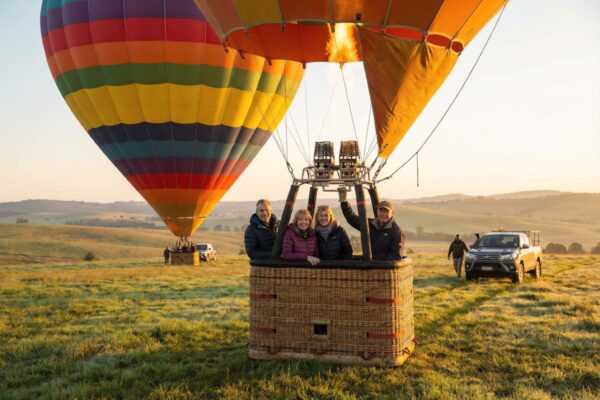
Passengers do not need any certificates, training, or qualifications. A hot air balloon flight requires no prior theoretical preparation. You just need to show up at the agreed location and follow the pilot’s instructions. All responsibility for safety lies with the certified pilot.
Before takeoff, the pilot conducts a brief briefing covering basic rules. Passengers learn how to behave during takeoff and landing. Safety issues are discussed and questions answered. The entire process lasts about fifteen minutes and is easy to understand.
There is also no requirement to sign complicated medical documents. Most operators only require a short health declaration. People with serious medical conditions should consult their doctor before participating. Common ailments do not prevent participation.
The Belief That Only Young and Fit People Can Fly in Balloons
Hot air balloon flights are available for a wide age range. Children between 120 and 140 centimeters tall can participate in flights. There is practically no upper age limit. Operators have served passengers over 90 or even 100 years old.
The physical requirements are minimal compared to other aviation activities. Passengers must be able to enter the basket through an opening about 120 centimeters high. They need to be able to stand for an hour without support. There are no seats in the basket, which may be challenging for people with back problems.
Basic physical requirements:
- Minimum height of 120-140 cm for children
- Ability to independently enter the basket
- Ability to stand for 60 minutes
- Body weight usually below 130-140 kg
- No serious cardiovascular conditions
Older individuals, maintaining basic fitness, handle the flight very well. The calm nature of the experience requires no physical effort or reflexes. Many seniors discover ballooning as an ideal form of activity. The peace and safety make it an excellent intergenerational option.
Tip: Before booking a flight, honestly assess your physical condition. Discussing any limitations with the operator helps avoid disappointments. Most companies are happy to accommodate passengers’ individual needs.
Summary
Myths about balloon flights often diverge from reality more than with other forms of activity. Statistics clearly confirm that balloons are among the safest means of air transport. Concerns about sudden drops, lack of control, or extreme conditions are not supported by facts. Modern ballooning relies on proven procedures and precise weather forecasts.
Piloting and navigating a balloon is a complex art using natural atmospheric phenomena. Pilots skillfully utilize differences in wind direction at various altitudes. Although a balloon has no rudder, an experienced pilot can reach the intended landing spot. Flight control is much greater than commonly assumed.
The sensations during flight surprise with a calm and relaxing atmosphere. Silence, smooth movement, and comfortable temperature make the experience enjoyable even for those with fear of heights. Affordable pricing and minimal physical requirements open participation to wide groups of passengers. Dispelling myths allows for informed decisions and enjoying an unforgettable adventure in the skies.
Sources:
- https://www.bbc.com/travel/article/20240118-how-safe-are-hot-air-balloons-what-to-know-before-taking-to-the-clouds
- https://pmc.ncbi.nlm.nih.gov/articles/PMC4888601/
- https://publichealth.jhu.edu/2013/ballard-hot-air-balloons
- https://bezpieczenstwo.dlapilota.pl/sites/bezpieczenstwo.dlapilota.pl/files/raport_koncowy_1656_2019.pdf
- https://www.tygodnikpowszechny.pl/polska-byla-potega-baloniarstwa-do-czasu-katastrofy-w-dolinie-chocholowskiej-192111
- https://www.pap.pl/aktualnosci/news,1536890,kazdy-lot-balonem-to-pewna-niewiadoma.html