
A hot air balloon flight over vast urban areas presents a unique challenge for any pilot. Heat loss from the balloon envelope during such a flight can lead to uncontrolled descent. The physical mechanisms responsible for the cooling of the balloon operate continuously throughout the flight. Pilots must constantly monitor flight parameters and respond to changes in the air temperature inside the envelope.
The air temperature in the balloon naturally decreases without burner activity. This phenomenon is due to the fundamental laws of physics governing heat exchange. The situation becomes particularly complicated over built-up areas. Limited emergency landing options require precise control of flight altitude. Passenger safety depends on the pilot’s skill and knowledge of aviation regulations.
The urban zone is characterized by complex ground infrastructure. High-voltage power lines, tall buildings, and dense development make maneuvering difficult. Every meter of altitude is crucial when planning a safe landing. Understanding the thermodynamic processes occurring in the balloon enables sound decision-making.
Physical Processes of Heat Loss in a Balloon Envelope
The balloon envelope constantly exchanges heat with its surroundings through various physical mechanisms. This process occurs independently of the pilot’s will. Understanding these phenomena is crucial for safe flight operations. The temperature inside the envelope determines the lifting force of the entire aircraft.
The main mechanisms responsible for heat energy loss operate simultaneously. Their intensity depends on atmospheric conditions. The pilot must compensate for these losses with regular bursts from the propane burner. The balance between heating and cooling determines the stability of the flight altitude.
Rate of Air Temperature Decrease Without Burner Activity
The air inside the balloon loses temperature at a rate dependent on many factors. Without using the burner, cooling progresses continuously. The speed of this process directly affects the descent rate. A typical balloon with a volume of 2800 m³ can lose about 10-15°C per minute without reheating.
The temperature difference between the internal and external air gradually decreases. The smaller this difference, the weaker the buoyant force acting on the envelope. Cooling causes an increase in the density of the air in the balloon. Denser air no longer displaces a sufficient volume of the surrounding atmosphere.
Key factors influencing the rate of cooling:
- Balloon envelope volume and its external surface area
- Current ambient temperature during the flight
- Wind speed in the balloon’s flight path
- Thermal properties of the envelope material
- Relative humidity of the atmospheric air
The temperature drop directly translates into a change in flight altitude. The balloon begins to descend at a speed proportional to the heat loss. The pilot must react before the descent rate becomes too high. A delayed reaction can lead to a situation requiring intensive reheating.
Colder days are conducive to more efficient flying due to a greater natural temperature difference. In summer, the pilot must use the burner much more frequently. An increase in ambient temperature reduces the efficiency of buoyancy. Every degree Celsius matters for the thermal balance of the balloon.
Thermal radiation as the main route of energy loss
Thermal radiation accounts for approximately 70% of the total heat loss from the balloon envelope. It is the dominant mechanism of energy exchange with the surroundings. The envelope emits infrared radiation proportionally to the fourth power of the temperature. Each part of the material acts as a source of thermal radiation.
The envelope material, heated to a temperature of about 80-100°C, intensely radiates heat. This process occurs independently of external air movement. Radiation does not require a material medium to transfer energy. Radiative losses are greatest in the initial phase of flight after intense heating.
Darker fabric colors absorb more solar radiation during the day. However, the same principle works in reverse during heat emission. A high-emissivity envelope surface loses heat faster. Modern balloon materials optimize these properties for better thermal performance.
Convection and heat exchange with the environment during flight
Convection accounts for about 20% of the balloon’s total heat loss. Air movement around the envelope intensifies heat exchange. Higher wind speeds increase the cooling rate. The layer of air near the envelope surface is constantly being replaced.
Cold outside air takes heat from the heated fabric. The heated air rises and is replaced by cooler layers. A natural convective circulation forms around the envelope. The intensity of this process increases with the speed of the balloon’s movement.
Factors intensifying convection:
- High wind speed in the flight layer
- Large temperature difference between the envelope and the surroundings
- Atmospheric turbulence in urban areas
- Updrafts over heated buildings
Over urban areas, convection occurs in a more complex manner. Buildings create local air vortices. Concrete and asphalt surfaces generate thermal currents. These phenomena affect the temperature stability within the balloon.
The effect of air humidity on the cooling rate of the envelope
Humid air is denser than dry air. An increased amount of water vapor in the atmosphere affects balloon performance. Humidity limits the effectiveness of the lifting force acting on the envelope. The balloon requires more energy to maintain altitude in conditions of high humidity.
Condensation of water vapor on the inner surface of the envelope further accelerates cooling. This process is particularly intense during balloon cooling. Condensed moisture increases the mass of the entire structure. The additional weight requires stronger heating for compensation.
Gas burners operate less efficiently in humid air. Propane combustion requires appropriate atmospheric conditions. High humidity can affect the burner flame characteristics. The pilot must adjust the heating technique to the prevailing conditions.
Pilot’s Reactions to Decreasing Temperature Over an Urban Area
A decreasing air temperature within the envelope requires an immediate pilot reaction. Altitude control over urban areas is critical for safety. The pilot has a set of measuring instruments providing key information. Every decision must consider the limited options for emergency landings.
A conscious pilot constantly monitors flight parameters. Predicting temperature changes allows for proactive action. Precise burner control prevents sudden altitude changes. Planning every stage of flight over a city requires special attention.
Monitoring Flight Parameters Using a Variometer and Altimeter
The variometer indicates vertical speed in meters per second. This instrument provides information on the rate of ascent or descent of the balloon. The pilot observes the variometer almost continuously during flight. The readings from this instrument allow for a quick reaction before a significant loss of altitude.
The barometric altimeter measures the current altitude above sea level. Measurement accuracy reaches a few meters with proper calibration. A second, relative altimeter shows the difference from the starting point. GPS systems provide an additional reading independent of atmospheric pressure.
Modern instruments combine the functions of multiple devices into one unit. The Flytec Balloon 4 or Digitool DBI3 offer comprehensive parameter monitoring. A large display allows for quick readings during dynamic maneuvers. A wireless thermometer monitors the temperature at the top of the envelope.
Controlling the Propane Burner for Descent Control
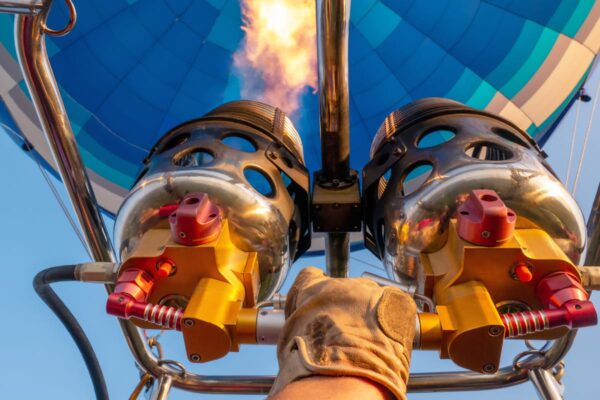
The propane burner is the primary tool for controlling flight altitude. Short flame pulses allow for subtle adjustments to air temperature. Longer burner use is necessary during intense descents. The pilot balances fuel economy with maintaining a safe altitude.
The technique of pulsed heating requires experience and feel. Pulses that are too weak will not stop the descent in time. Excessive heating leads to uncontrolled ascent. The envelope temperature must not exceed 120°C for safety reasons.
Burner Control Parameters:
- Heating pulse frequency
- Duration of a single flame pulse
- Gas pressure in propane cylinders
- Current air temperature in the envelope
- Descent speed indicated by the variometer
Over an urban area, the pilot uses the burner more cautiously than over open terrain. Sudden altitude changes are undesirable near buildings. Smooth temperature control ensures a predictable flight path. Every use of the burner is deliberate and purposeful.
Selecting the Appropriate Wind Layer for a Safe Maneuver
Wind of varying speed and direction exists at different altitudes. The pilot utilizes these differences for navigation and safe maneuvering. Changing flight altitude allows for finding a more favorable direction of travel. This technique is particularly useful when planning a landing site.
Above the city, wind layers are more turbulent than over open terrain. Buildings create local eddies and changes in direction. The pilot must consider these phenomena when choosing an altitude. Experience in urban flights helps in predicting wind behavior.
A decreasing balloon temperature may force a flight at lower altitudes. The pilot then loses the ability to freely choose the wind layer. This situation requires intensive reheating to regain altitude. Alternatively, an earlier landing in a safe location can be planned.
Communication with the ground crew during landing planning
The ground crew tracks the balloon’s position using a GPS system. Constant radio contact allows for the transmission of information about conditions along the route. The ground team identifies potential landing sites from street level. Cooperation between the pilot and the crew is crucial during flights over the city.
The pilot informs the team about the planned landing time and location. The crew positions themselves near the chosen area. They confirm the absence of obstacles and the possibility of safe access. A backup communication system protects against the failure of main devices.
| Communication Element | Safety Significance | Transmission Frequency |
|---|---|---|
| Current GPS Position | Route tracking by the crew | Every 5-10 minutes |
| Altitude and Descent Rate | Estimation of landing time | During significant changes |
| Ground Wind Conditions | Assessment of landing safety | 15 minutes before landing |
| Landing Site Assessment | Confirmation of no obstacles | Before commencing descent |
Regular exchange of information between the pilot and the ground crew builds situational awareness for both parties. The ground team provides observations regarding obstacles not visible from the air. The pilot informs about changes to the landing plan caused by weather conditions. Effective communication shortens reaction time during situations requiring quick decisions.
Tip: Always establish a backup communication channel with the ground crew before takeoff, using different radio frequencies or additional mobile phones to ensure connectivity throughout the flight.
Risks Associated with Uncontrolled Balloon Descent Over a City
An uncontrolled balloon descent over a built-up area poses serious risks. Urban infrastructure includes numerous aerial obstacles. Power lines, tall buildings, and dense development limit maneuverability. Loss of altitude control can lead to collisions with these objects.
The population density in cities increases the risk to bystanders. An emergency landing in the wrong place can endanger pedestrians. The pilot’s legal responsibility includes the safety of people on the ground. Adherence to aviation regulations minimizes these risks.
Regulations on Minimum Altitude Over Built-Up Areas
Aviation regulations in Poland specify minimum flight altitudes over cities. The minimum altitude depends on the number of inhabitants in a given city. Cities with 25,000-50,000 inhabitants require a minimum of 500 meters for certain types of aircraft. Larger conurbations impose more restrictive limitations.
Cities with a population of 50,000-100,000 inhabitants require an altitude of at least 1000 meters. Conurbations with over 100,000 inhabitants establish a limit of 1500 meters AGL. Unpowered balloons are subject to the same rules as other aircraft. Exceptions to these rules require the consent of the city mayor.
Altitude Categories Over Urban Areas:
- Cities with 25,000-50,000 inhabitants: 500-1000 m AGL
- Cities with 50,000-100,000 inhabitants: 1000 m AGL
- Cities with over 100,000 inhabitants: 1500 m AGL
- Warsaw: special requirement of 2000 m AGL
- Flights below limits: city authority consent required
The pilot is responsible for adhering to these regulations when planning the route. Loss of altitude over a city can lead to a violation of regulations. An emergency situation does not absolve responsibility for safety. It is necessary to maintain an adequate altitude reserve above minimum limits.
Risk of Collision with Urban Infrastructure During Altitude Loss
High-voltage power lines pose a deadly threat to balloons. The metal structure of the basket conducts electricity perfectly. Contact with wires can be fatal for passengers. Power lines are often poorly visible from the air.
Tall buildings create aerial obstacles in city centers. Skyscrapers generate turbulence in their surroundings. A descending balloon can be drawn by downdrafts along walls. Antennas and masts on building roofs pose an additional hazard.
Trees and advertising structures impede safe landing. Anchor hooks can snag on branches or structures. Damage to the envelope from sharp objects leads to loss of lift. The pilot must observe the terrain below the balloon and identify potential hazards.
Terrain Assessment for Safe Emergency Landing Sites
Urban areas offer limited safe landing opportunities. Green spaces such as parks or sports fields are preferred locations. An open area of at least 100 x 100 meters is required for a safe descent. The absence of power lines within the approach path is crucial.
A flat surface without steep slopes facilitates a controlled landing. Stable ground without deep ditches or bodies of water prevents the basket from tipping over. The pilot assesses these parameters through continuous terrain scanning. Potential landing sites are identified in advance.
A parking lot at a shopping center can serve as an emergency landing site. Large schoolyards or sports facilities offer sufficient space. However, any landing in a city requires coordination with the ground crew. Securing the area from onlookers minimizes the risk of incidents.
Pilot’s Legal Obligations When Flying Over Urban Areas
The balloon pilot bears full responsibility for flight safety. An aviation license imposes the obligation to know aviation regulations. Violating minimum altitudes over cities is subject to legal penalties. The pilot must document every flight according to regulatory requirements.
Civil liability insurance protects against third-party claims. The policy must cover ground damage and passenger injuries. The insurance coverage amount is determined by regulations. Flying without valid insurance is a serious offense.
Filing a flight plan with air traffic services is mandatory in certain cases. Coordination with air traffic control prevents conflicts with other aircraft. The pilot informs about the intention to fly over an urban area. Services may impose additional restrictions for safety reasons.
Tip: Before every flight over an urban area, check the current aviation obstacle map and save the coordinates of all potential emergency landing sites along the planned route in your GPS device.
Emergency Flight Termination Procedures in Urban Areas
Emergency flight termination over a city requires precise execution of procedures. Controlled descent minimizes risks to passengers and people on the ground. Every step of the procedure has a safety justification. The pilot practices these maneuvers during training and periodic skill assessments.
Communication with passengers is crucial during an emergency landing. Clear instructions prevent panic and chaotic reactions. Passengers’ mental preparation influences their behavior upon contact with the ground. Calm and firm command delivery calms the atmosphere in the basket.
Passenger Instructions for Landing Position
The landing position is crucial for passenger safety. Knees should be slightly bent to absorb impact. Hands should firmly grip the handles mounted in the basket. The body should be oriented in the direction of the balloon’s movement during landing.
Passengers receive instructions a few minutes before expected ground contact. The pilot explains the possibility of the basket bouncing multiple times. It is important to remain in the protective position until completely stopped. Standing up too early risks falling with a subsequent impact.
Key elements of the landing position:
- Feet shoulder-width apart for stability
- Springy knees, slightly bent at the joints
- Hands holding the handles with a firm but not stiff grip
- Head tilted slightly forward, chin to chest
- Backpack or loose items secured to prevent falling out
Children and the elderly require special attention during landing. The pilot may ask stronger passengers for assistance in holding them. Each passenger must know their role before descent begins. Practicing the position during the flight increases confidence in execution.
Using the parachute valve to regulate descent
The parachute valve is located at the top of the balloon envelope. The control line runs through the entire envelope to the basket. Pulling the line opens the valve and releases hot air outwards. The pilot controls the degree of valve opening to regulate the descent speed.
Gradual air release allows for a smooth reduction in altitude. Abruptly opening the valve is reserved for critical situations. The technique of pulsating valve opening is combined with the use of the burner. Balancing heating and cooling requires experience.
In the final phase of landing, the valve can be opened wider to cushion the impact. Reducing pressure in the envelope lessens the force of the basket’s bounce. After ground contact, the valve is opened completely. Air escapes quickly, eliminating the risk of the balloon lifting off again.
Cooperation with the ground crew for basket stabilization after landing
The ground crew reaches the landing site as quickly as possible. Team members grab the balloon’s anchor ropes. Holding the basket prevents it from tipping over due to side wind. Coordinated team action is crucial immediately after landing.
Passengers leave the basket only after the situation is completely stabilized. The pilot gives permission for passengers to disembark one by one. Rushing during disembarkation can destabilize the structure. A calm and orderly disembarkation prevents incidents.
Complete deflation of the envelope occurs after passenger evacuation. The envelope descends to the ground in a controlled manner. The crew secures the fabric against wind. Quick and efficient action minimizes the time spent occupying the landing site.
Tip: Ensure each ground crew member is assigned a specific role during basket stabilization after landing, such as holding a designated anchor rope or securing the basket’s entry gate against accidental opening.
Professional Hot Air Balloon Flights with ProBallooning
Hot air balloon flights over the picturesque landscapes of Mazovia offer unforgettable experiences and views inaccessible from the ground. ProBallooning specializes in organizing safe ballooning adventures for various groups of participants. Experienced pilots hold the necessary qualifications and flight licenses required by regulations. Each flight adheres to safety procedures and current aviation regulations.
A professional approach to hot air balloon flights includes a thorough check of weather conditions before takeoff. Collaboration with a qualified ground crew ensures the efficient organization of the entire undertaking. Participants receive safety instructions and guidance on behavior during the flight. Tested aviation equipment undergoes regular technical inspections and maintenance.
Diverse Flight Options for Every Occasion
ProBallooning offers private flights for small groups seeking intimate aerial experiences. Larger groups can opt for group flights organized in attractive locations. Special occasions such as proposals or anniversaries gain a unique character during a balloon flight. Gift vouchers are an original gift idea for loved ones.
The company serves the regions of Warsaw, Radom, and Łódź, adapting routes to local conditions. Takeoff typically occurs in the early morning or before sunset. Favorable weather conditions ensure a calm and safe journey. The duration of the flight allows for full appreciation of the landscape’s beauty from a bird’s-eye view.
ProBallooning pilots have many years of experience flying balloons over various terrains. Each participant receives detailed information about the flight’s course before entering the basket. Weather conditions are monitored until the last moment before takeoff. The decision to fly takes into account wind parameters, visibility, and atmospheric stability.
Positive Customer Experiences
Flight participants value the crew’s professionalism and the calm atmosphere throughout the entire journey. Safe landings and the ground crew’s assistance build trust in the organizer. Satisfied customers readily recommend this form of entertainment to friends and family.
Interested parties can check current prices and available flight dates on the company’s website. Booking requires prior contact and agreement on organizational details. The ProBallooning team provides consultations, answering questions about flight preparations.
Factors Affecting Heat Loss Rate During Flight
The rate of balloon cooling depends on a complex combination of atmospheric factors. External conditions influence the thermal balance of the envelope. The pilot must understand these relationships for effective temperature management. Optimizing fuel consumption requires knowledge of all influencing parameters.
Each flight takes place in different atmospheric conditions. Flexible adjustment of piloting technique to the situation is crucial. Experience allows for predicting the balloon’s behavior under given conditions. Conscious fuel management extends the possible flight time.
Ambient Temperature and Its Significance for Air Density Difference
External temperature determines the efficiency of the balloon’s buoyancy. A cooler environment increases the density difference between the internal and external air. A larger density difference generates stronger lift. Winter flights require less energy to maintain altitude.
On hot days, the temperature inside the envelope must be significantly higher. Achieving the required density difference necessitates more intense heating. Propane consumption increases proportionally to the ambient temperature. The pilot must have larger fuel reserves in warm conditions.
The air temperature in the balloon is typically 90-110°C during flight. In winter, even 30-40°C may be sufficient to maintain lift. This difference directly translates to the economic efficiency of the flight. Planning flights during cooler parts of the day optimizes operational costs.
Envelope Volume and the Amount of Heated Air in the Balloon
A larger envelope volume means more air to heat. A standard tourist balloon holds approximately 2800 m³ of air. Larger commercial balloons can reach volumes of 4000-5000 m³. Each cubic meter requires energy to heat and maintain its temperature.
Volume affects the rate of balloon cooling. A larger mass of air retains heat for longer. However, a larger envelope surface area increases heat loss through radiation. The balance between these factors determines the thermal characteristics of the balloon.
Characteristics by Balloon Volume:
- Balloon 2000-2500 m³: 2-3 passengers, consumption 25-35 liters/hour
- Balloon 2800-3200 m³: 4-6 passengers, consumption 30-40 liters/hour
- Balloon 3500-4000 m³: 8-10 passengers, consumption 40-55 liters/hour
- Balloon above 4500 m³: 12+ passengers, consumption 60+ liters/hour
The weight of passengers and equipment also affects energy requirements. An additional 200 kg of mass can increase fuel consumption by 25-30%. The pilot considers the total weight when planning fuel reserves. The optimal balloon load ensures the best flight efficiency.
Atmospheric Conditions Affecting Burner Performance
Atmospheric pressure affects air density at different altitudes. Lower pressure at higher altitudes reduces atmospheric density. The balloon requires less energy to displace thinner air. However, cooler temperatures at altitude compensate for this effect.
Air humidity affects the propane combustion process. Dry air promotes more efficient fuel combustion. Humid conditions can reduce the burner flame temperature. The pilot observes the flame characteristics and adjusts their usage technique.
Updrafts and downdrafts in the atmosphere affect altitude control. Strong thermal currents over a city can lift the balloon without using the burner. Utilizing these natural phenomena saves fuel. The pilot looks for areas with favorable currents during flight.
Propane Fuel Consumption in Various Flight Scenarios
Typical propane consumption is 30-40 liters per flight hour. The intensity of burner use determines the actual consumption. A calm flight over flat terrain requires less fuel. Dynamic maneuvering over a city increases energy demand.
Balloon takeoff requires the highest fuel consumption in the initial phase. Intense heating of the envelope to achieve lift lasts for 10-15 minutes. During stable flight, consumption decreases to a sustaining level. Landing does not require significant burner use.
Propane remains in gaseous form down to -42°C. This property ensures reliable burner operation in various conditions. The pressure in the tanks depends on the fuel temperature. Cold fuel generates lower pressure and less flow through the burner.
A 40-liter propane tank is sufficient for approximately 60-90 minutes of flight. Most commercial balloons have 2-4 tanks to ensure reserves. The pilot monitors fuel levels using pressure gauges. Flight planning includes a safe fuel reserve for unforeseen situations.
Tip: Always plan for a fuel reserve of at least 30% above the predicted consumption when flying over urban areas, as limited landing options may require extending the flight to find a safe descent spot.
Summary
Heat loss from the balloon envelope during flight over a city is a natural physical phenomenon requiring constant pilot attention. Thermal radiation and convection account for the dominant portion of energy loss from the heated air. The pilot controls the temperature using a propane burner, monitoring flight parameters with specialized instruments. Adherence to regulations regarding minimum altitude over built-up areas protects both passengers and people on the ground.
Knowledge of emergency landing procedures and cooperation with the ground crew ensure safety in critical situations. Atmospheric factors such as ambient temperature, humidity, or thermal currents affect the rate at which the balloon cools. Conscious fuel management and the utilization of natural meteorological phenomena optimize flight efficiency. Pilot experience and precise piloting technique are crucial for a safe flight over urban infrastructure.
Every balloon flight over a built-up area requires special care in planning and execution. Limited emergency landing options impose additional responsibility on the pilot and the ground crew. Understanding the physical processes of heat loss and the ability to react appropriately to changing conditions guarantee a safe and enjoyable aviation experience for all flight participants.
Sources:
- https://escholarship.org/content/qt68j7s6j5/qt68j7s6j5.pdf
- https://www.hep.phy.cam.ac.uk/~lester/teaching/PartIIIProjects/2011-AndyFurmanski-SolarPoweredHotAirBalloons-REPORT-final-version.pdf
- https://nvlpubs.nist.gov/nistpubs/nbstechnologic/nbstechnologicpaperT128.pdf
- https://www.easa.europa.eu/sites/default/files/dfu/Balloon%20Rule%20Book.pdf
- https://latajlegalnie.com/2019/09/25/wysokosci-lotow-nad-miastami-nowe-przepisy/
- https://ulc.gov.pl/_download/bezpieczenstow_lotow/prezentacje-2014/11_Sondowanie_atmosfery_za_pomoc%C4%85_balon%C3%B3w_swobodnych.pdf
- https://www.forum-lotnicze.pl/jakie-sa-zasady-dla-lotow-nad-terenami-zaludnionymi/
- https://www.bbml.org.uk/wp-content/uploads/2024/10/How-a-balloon-works-final-version.pdf